


[ad_1]
India is planning to launch at least 300 more satellites over the next five to six years and will also have a space station by 2035, V Narayanan, chairman of the Indian Space Research Organisation, said on Saturday. He added that the uncrewed mission of Gaganyaan, India’s first human spaceflight programme, would be launched by the end of this year.
This comes as space regulator IN-SPACe has started the process of handing over the operations and management of Isro’s upcoming Small Satellite Launch Complex (SLC) at Kulasekarapattinam in Tamil Nadu to the private sector. The project may see an investment of Rs 986 crore.
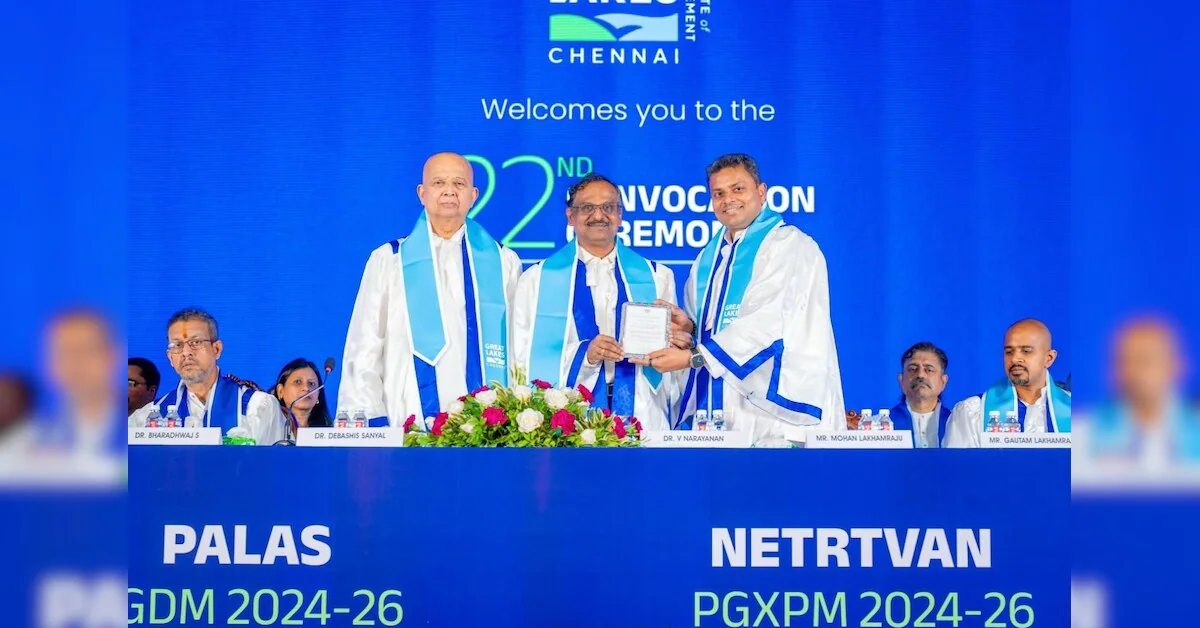
“By the end of this year, the first uncrewed Gaganyaan rocket is going to lift off from Sriharikota. We are all working towards having our own space station by 2035. The Prime Minister has given us the task of taking at least 300 satellites to orbit in the next five to six years,” Narayanan, who is also the Secretary, Department of Space, and Chairman of Space Commission, said while addressing the 22nd Convocation Ceremony at the Great Lakes Institute of Management in Mahabalipuram, near Chennai.
He added that the Indian space programme had evolved from depending on rockets and satellites from other countries to having launched 434 foreign satellites from 36 countries on a commercial basis using Indian rockets. For the recent Operation Sindoor, too, India used more than 20 satellites.
Isro scientists saved Axiom 4 mission
Last year, Shubhanshu Shukla became the first Indian astronaut to reach the International Space Station and the first Indian to travel to space after Rakesh Sharma. However, Narayanan said Isro scientists had played a key role in averting a possible mishap during the launch of that mission.
Originally, the launch was planned for June 11 last year; it was finally conducted on June 25. “On June 10, me and my team were camping in Kennedy Space Centre, and we came to know the Falcon rocket that was supposed to carry Shukla and three astronauts had a leakage problem. The team discussed there, they cleared and the countdown was already going on for the next day morning launch. We, with our limited knowledge of 40 years, know it’s a tricky job. We insisted on correcting it. When they inspected, there was a crack. Based on our insistence, the rocket launch was called off, and a catastrophic situation was avoided,” he said.
Private sector to hold key role in SLC
IN-SPACe issued an expression of interest last week to hand over responsibility for the operation and management of the SLC, located at Kulasekarapattinam in Thoothukudi district, to an Indian private firm. This is in alignment with the space-sector reforms announced by the government of India and the Indian Space Policy–2023, which opened space operations to private-sector participation.
IN-SPACe, through Isro, will facilitate the handing over of facilities established at the SLC to the selected party for operation and management.
This opportunity is aimed at capable Indian industries with demonstrated experience in executing and managing large-scale, multidisciplinary infrastructure and operations projects and an interest in undertaking the operation and management of the Small Satellite Launch Complex (SLC) to provide commercial launch services to launch-vehicle operators.
To facilitate a smooth transition and capability development, Isro will provide the selected party with the necessary technical guidance, operational support, training and hand-holding assistance for a defined period, up to the completion of three launch services provided by the selected party to launch-vehicle operators or one year, whichever is earlier.
Narayanan pointed to the evolution of India’s space programme as a particularly powerful example of what could be achieved through perseverance and indigenous capability. From the first rocket launched from Indian soil in 1963, with components transported by bicycle, to Chandrayaan-3’s historic soft landing near the lunar south pole and the development of indigenous cryogenic engine technology, India’s journey, he noted, had been defined by the ability to overcome constraints and build capabilities against the odds.
The story of Isro, he emphasised, was equally a lesson in management and leadership. Bringing together multidisciplinary experts, subject-matter specialists, international partnerships and complex technological requirements under extreme constraints required more than individual brilliance. It required people who could work as a team, trust one another and remain focused on a shared purpose. “Isro succeeds because of the team,” he told the graduating students.
[ad_2]
Source link