

[ad_1]
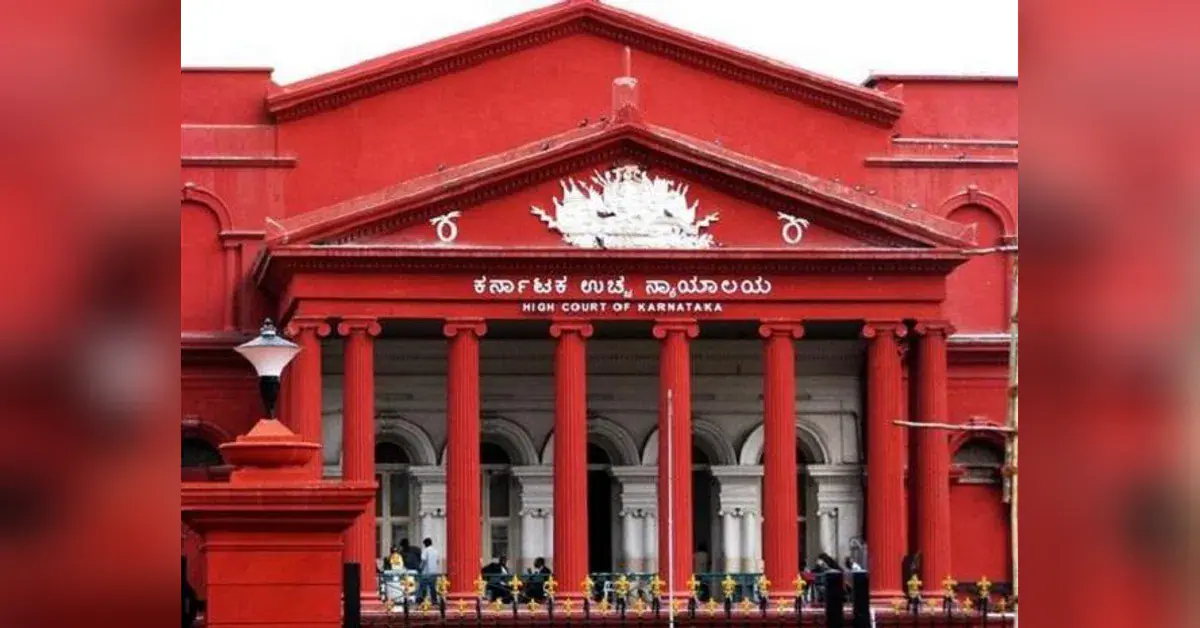
When the Dharwad Bench of the Karnataka High Court reconvened this Saturday, it was not like any other day.
Women not only occupied every judicial Bench but also represented the State in every courtroom, making it one of the rare occasions when both the Bench and the Bar were entirely women-led.
On August 1, every one of the seven Benches hearing cases that day was presided over by women judges. Facing them across the courtroom was another rarity: an all-women team of Karnataka government law officers representing the State.
The all-women convergence makes the special sitting more than a symbolic exercise. While all-women Benches have been constituted on a handful of occasions in the Supreme Court and some High Courts, an all-women government legal team appearing before every Bench is believed to be unprecedented.
The Office of the Advocate General deputed women Additional Advocate Generals, Additional Government Advocates and High Court Government Pleaders to argue the State’s cases throughout the day. Additional Advocate General Prathima Honnapura led the team, joined by nearly 20 women law officers assigned across the seven Benches.
The roster of all-women judges was issued on July 23 after the Dharwad Advocates’ Association sent a request to Chief Justice Vibhu Bakhru in March, coinciding with International Women’s Day. The Dharwad Bench has seven Benches. While three Division Benches had two women judges each, four single-judge Benches were also presided over by women.
The judges included Justices Anu Sivaraman, K G Shanthi, Jyoti M, P Sree Sudha, Lalitha Kanneganti, K S Hemalekha, Chillakur Sumalatha, Tara Vitasta Ganju, Geetha K B and Rajeshwari N Hegde.
The significance of the event lay not merely in the numbers but in what they represent. Women continue to account for only a small fraction of judges in constitutional courts, while government litigation, traditionally dominated by men, has seen comparatively fewer women occupying senior positions such as Additional Advocate General or High Court Government Pleader.
According to data placed by the Union government before Parliament earlier this year, there were 116 women judges out of a working strength of 781 judges across the High Courts as of February 2026, accounting for 14.85 per cent of the sitting judiciary.
In district courts, women now account for nearly 38 per cent of judges, reflecting a steadily strengthening pipeline of women entering the judicial service.
However, until now, no woman has ever been appointed Attorney General or Solicitor General of India.
Not the first but a first of its kind
India has seen all-women Benches before, though only occasionally.
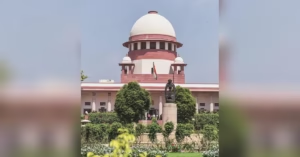
The Supreme Court constituted its first all-women Bench in 2013 with Justices Gyan Sudha Misra and Ranjana Prakash Desai. Since then, a few other all-women combinations have heard cases, including Benches of Justices R Banumathi and Indira Banerjee, Justices Hima Kohli and Bela M Trivedi, and Justices B V Nagarathna and Hima Kohli.
Among High Courts, the Kerala High Court constituted an all-women Full Bench on International Women’s Day in 2022. One of the judges on that Bench was Justice Anu Sivaraman, who was once again part of a landmark all-women sitting, this time at the Karnataka High Court.
Yet the Dharwad sitting went a step further. Instead of limiting the initiative to the judiciary, it extended the idea to the government’s legal machinery. Every courtroom witnessed women on both sides of the dais — judges hearing matters and State law officers presenting the government’s case.
The move also came at a time when conversations around gender diversity in the legal profession have shifted from representation to leadership.
While the number of women entering law schools and joining the profession has steadily increased, their presence in senior litigation, particularly in constitutional courts and government law offices, remains disproportionately low.
Currently, a public interest litigation (PIL) filed by the Ladli Foundation Trust, seeking at least a 30 per cent reservation for women lawyers in government legal panels, is pending before the Supreme Court.
[ad_2]
Source link