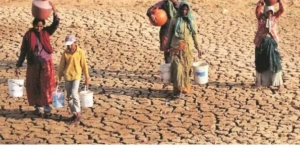


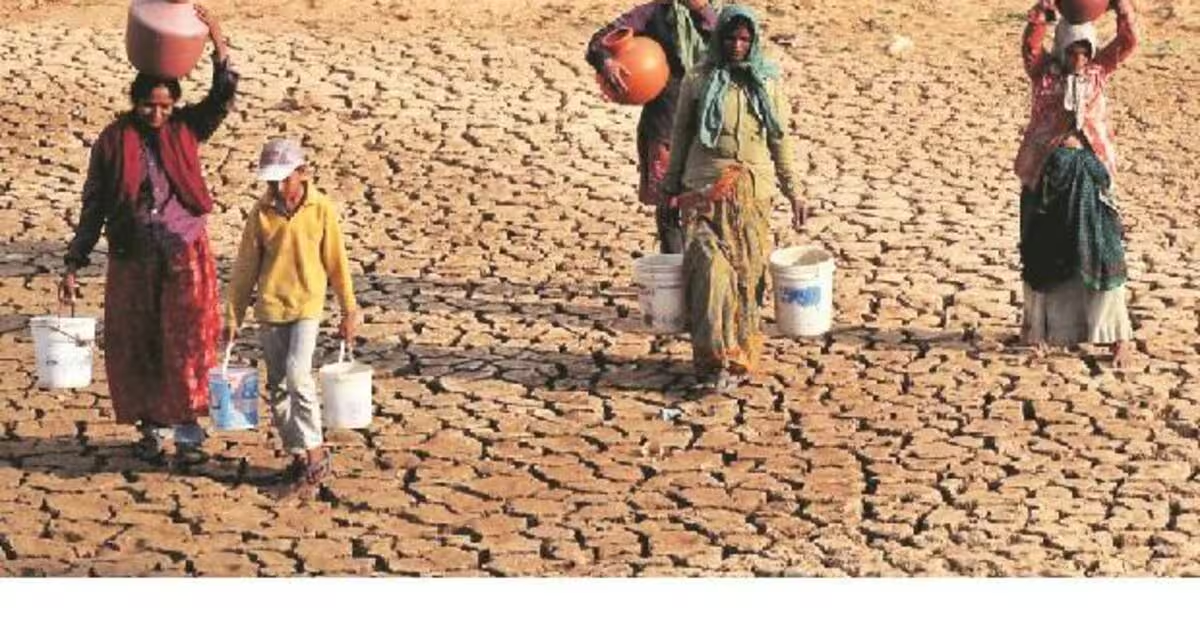
The state’s Water Resources Department has prepared a dam-wise and use-wise water management plan up to August 31, 2027, factoring in the possibility of a drought-like situation. According to the plan, drinking water will receive the highest priority, while the state government has asked local bodies, industries, farmers and citizens to conserve water.
Why has Maharashtra imposed a 10% water cut?
The decision comes amid a deficient monsoon and concerns over water availability in the coming months. The state government has also cited the possibility of El Niño conditions extending into the following year, which could further affect rainfall and reservoir inflows.
Earlier in September, Maharashtra declared drought in 265 talukas out of its 358 talukas, covering nearly 74 per cent of the state. The drought affects 32 districts. Against this backdrop, the Water Resources Department has planned the use of available water stocks.
A 10 per cent additional emergency buffer stock would be maintained in each dam, he said, adding that water from the dead storage of a reservoir could be used after a technical assessment.
What measures has the government announced?
The 10 per cent cut in water supply will apply across urban and rural local bodies, with municipal corporations, municipalities and gram panchayats directed to implement it from October 16.
Local bodies have also been asked to undertake special drives to identify and prevent water leakage. Sewage treatment plants will operate at full capacity, as treated wastewater will be used for activities such as gardening, construction and washing.
Furthermore, industries have been directed to reuse or recycle at least 30 per cent of the water they consume.
The state government, in a statement, said it will also crack down on unauthorised water extraction from dams, rivers and canals. The state will form joint teams with the Water Resources, Revenue and police authorities, which will patrol these areas and seize illegal pumps and equipment.
What does the water plan mean for agriculture?
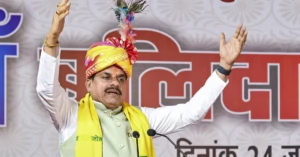
Under the state’s plan, drinking water will take priority over irrigation. Water will be released for irrigation only after meeting drinking water, livestock and fodder requirements, Mahajan said.
Among crops, Rabi foodgrains and fodder will receive the highest priority, followed by other Rabi crops. Water will be supplied to perennial crops only if stocks remain after meeting these requirements.
The government has also said it will encourage water-saving irrigation methods. Water availability will be reviewed regularly through guardian ministers and canal advisory committees.
The latest restrictions follow similar measures taken by Mumbai’s civic body in May and June this year, when the city’s reservoirs came under pressure from the delayed southwest monsoon. In May, the BMC had imposed a 10 per cent water cut, which it increased to 20 per cent in June for industrial, commercial and sports establishments, while suspending water supply to ongoing construction projects and swimming pools. At the time, the city’s seven reservoirs had only about 10 per cent of their useful storage capacity.