

[ad_1]
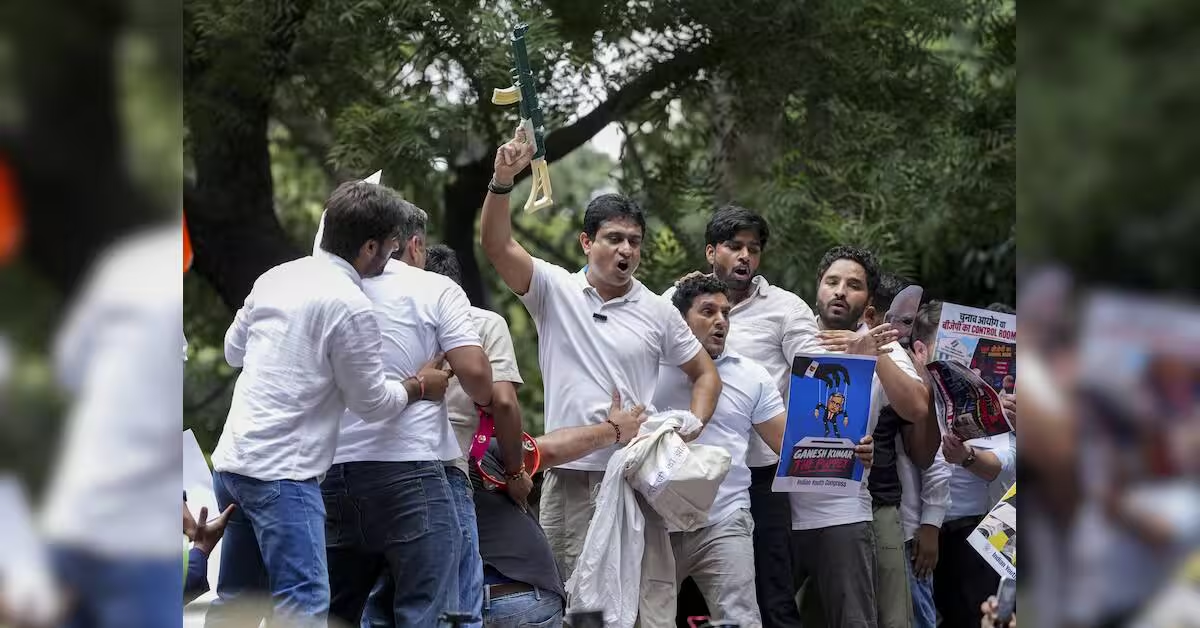
Delhi is on heightened security alert on October 2, as the Cockroach Janta Party (CJP) and several opposition parties and student organisations prepare to hold protests demanding the resignation of Chief Election Commissioner (CEC) Gyanesh Kumar over alleged irregularities in electoral rolls and the Election Commission’s handling of the Special Intensive Revision (SIR) exercise.
Delhi Police has denied permission for the proposed gathering at Jantar Mantar, which was scheduled to begin at 11 am on Gandhi Jayanti. Prohibitory orders have also been imposed in the New Delhi district, while the Delhi Metro Rail Corporation (DMRC) has closed entry and exit at 11 stations until further notice.
Here is everything you need to know about the planned protest, the demands and the restrictions in place.
Why are protesters demanding CEC Gyanesh Kumar’s resignation?
The protest is based on allegations of irregularities in electoral rolls and concerns over the Election Commission’s conduct of elections and its implementation of the Special Intensive Revision (SIR) exercise.
The organisers and participating groups have raised concerns about the alleged deletion of voters’ names from electoral rolls and the implications for citizens’ voting rights. They are seeking Kumar’s resignation or removal from office.
Who has called the October 2 protest?
The proposed demonstration at Jantar Mantar has been called by the All India Students’ Association (AISA), Rajya Sabha MP Manoj Jha and Supreme Court advocate Prashant Bhushan.
AISA national president Neha Bora, Bhushan and Jha announced the proposed gathering at a press conference a day before the protest. Bora said the organisers had informed the Parliament Street police station about the event, including its proposed timing, expected turnout and details of those responsible for organising it.
The Aam Aadmi Party (AAP), the National Students’ Union of India (NSUI) and the Indian Youth Congress (IYC) are among the political and student organisations whose members are expected to participate in demonstrations against Kumar.
Former Delhi deputy chief minister and senior AAP leader Manish Sisodia also appealed to people on social media to join the gathering and called for the CEC’s resignation.
Has Delhi Police granted permission for the protest?
Delhi Police has denied permission for the proposed gathering at Jantar Mantar and stepped up security across the New Delhi district.
Barricades have been installed around key locations, while additional Delhi Police personnel and Central Armed Police Forces (CAPF) personnel have been deployed at Jantar Mantar and other sensitive points.
The police have also imposed prohibitory orders under Section 163 of the Bharatiya Nagarik Suraksha Sanhita (BNSS) in the New Delhi district.
The order prohibits public meetings or assemblies of five or more people, processions, demonstrations, picketing and dharnas without prior written permission. It also restricts shouting slogans, making speeches and carrying specified objects, including firearms, banners, placards, lathis, swords, sticks and brickbats, without the required permission.
Which Delhi Metro stations are closed?
The DMRC has announced the closure of entry and exit at 11 Metro stations in view of the proposed protests. The restrictions will remain in force until further notice.
The affected stations are:
- Janpath
- Patel Chowk
- Central Secretariat
- Rajiv Chowk
- Seva Teerth
- Mandi House
- Lok Kalyan Marg
- INA
- Chawri Bazar
- Ramakrishna Ashram Marg
- New Delhi
According to the DMRC, interchange facilities will continue to be available at Rajiv Chowk, Mandi House, New Delhi, and Central Secretariat stations.
Passengers travelling through central Delhi should check the latest Metro updates before starting their journeys, as the restrictions may affect access to stations in the area.
What is the significance of the protest?
The protest assumes significance as it is scheduled for October 2, which is observed as Gandhi Jayanti, and comes amid a series of demonstrations by opposition parties, student groups and civil society activists over the functioning of the Election Commission and the Special Intensive Revision (SIR) exercise.
The organisers are demanding Kumar’s resignation or removal, citing concerns over the revision of electoral rolls and alleged deletion of voters’ names, which they say raises questions about the protection of citizens’ voting rights. (With inputs from agencies)
[ad_2]
Source link