


[ad_1]
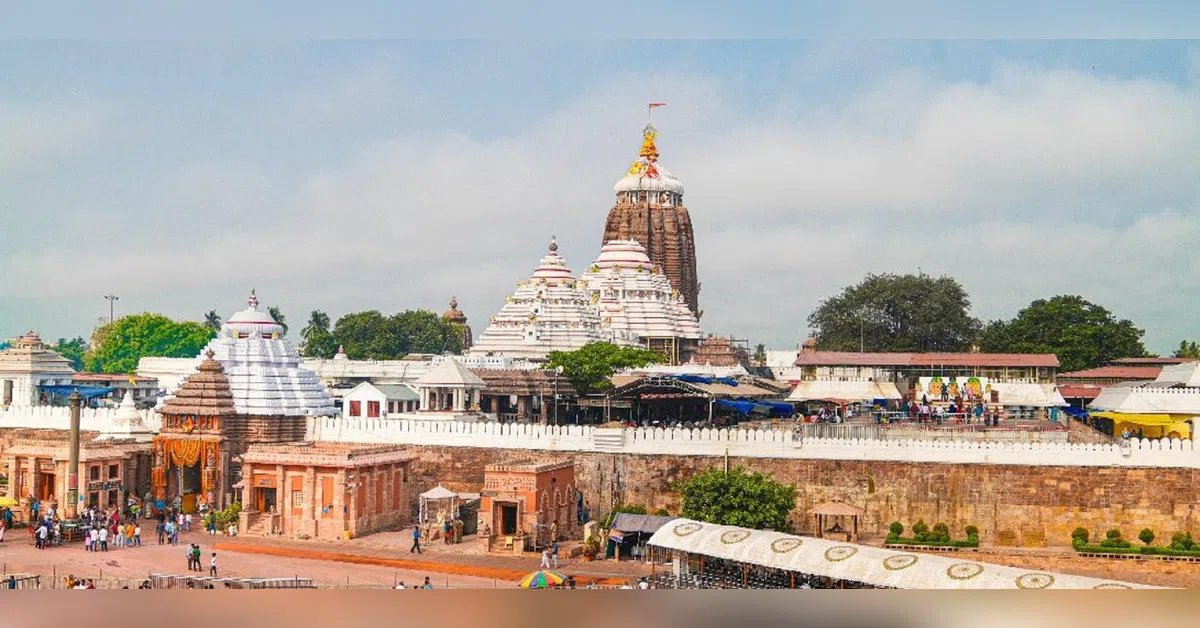
In a first for any shrine in India, the Shree Jagannath Temple Administration (SJTA) in Odisha’s Puri has secured intellectual property (IP) protection for key terms and words associated with the 12th-century shrine, and obtained trademark registration for its official logo. This marks a significant step towards legally safeguarding the cultural and spiritual identity of one of Hinduism’s most revered pilgrimage centres.
The temple administration has secured wordmarks for ‘Patitapabana’ (savior of the fallen) and ‘Ananda Bajara’, a place on the premises of the temple where devotees partake Mahaprasad, from Intellectual Property India. It has also secured the logomark for ‘Neelachakra’, the sacred eight-spoked metal disc that sits atop the main spire of the temple, which is the official logo of the SJTA.
The administration has filed applications for protection of 26 more revered terms, words, phrases, designs and identifiers like ‘Srimandir’, ‘Jagannath Dham’, ‘Purusottam Kshetra’, ‘Shreekshetra’, ‘Bada Danda’, and ‘Mahaprasad’ to prevent regional misrepresentation.
This comes against the backdrop of the recent controversy surrounding the use of the word “Dham” by the Mamata Banerjee government for the Jagannath temple complex at Digha in West Bengal. Odisha had strongly objected to the nomenclature, arguing that “Jagannath Dham” has historically and scripturally been associated exclusively with Puri, one of the four sacred Char Dham pilgrimage centres. The issue triggered a political and cultural debate between the two states before the newly elected BJP government led by Suvendu Adhikari removed the word “Dham” from the Digha temple signage.
“The temple administration had applied for IP rights of 29 items, including words, phrases, symbols and designs associated with the Lord Jagannath temple and Jagannath culture to protect the institutional identity of the shrine. We have submitted all evidences and identifiers in support of 26 other applications. We are optimistic about securing approval for the remaining items as well,” said Arabinda Kumar Padhee, additional chief secretary of revenue and disaster management department and chief administrator of SJTA.
While temple officials described the registrations as “patents”, intellectual property experts clarified that the protection pertains to trademarks in the form of wordmarks and logomarks, which are generally granted for inventions and technological innovations. This will help prevent misuse, commercial exploitation and misrepresentation of terms that have evolved over centuries and are deeply embedded in Odisha’s religious and cultural consciousness.
For devotees, many of these terms are not merely geographical or descriptive expressions but represent sacred concepts linked to Jagannath theology and ritual traditions. “Jagannath Dham” refers specifically to Puri’s status as one of Hinduism’s four principal pilgrimage centres. “Mahaprasad” denotes the sanctified food offered to Lord Jagannath and distributed to devotees. “Patitapaban” refers to the form of Lord Jagannath visible from outside the Lion’s Gate for those unable to enter the temple.
“A wordmark protects a specific word or phrase, while a logomark protects a visual symbol or design. These registrations for the temple will help establish exclusive rights and prevent unauthorised commercial or institutional use that may mislead the public. This is a good initiative to preserve and protect our religious heritage,” said Pradip Dash, former administrator (niti) of SJTA.
According to trademark experts, a registered wordmark offers protection to the text itself, irrespective of style, font or presentation. For example, if “Jagannath Dham” is eventually registered, any misleading commercial use of the phrase in protected categories could be challenged legally. A logomark, on the other hand, protects the temple’s visual identity and prevents its unauthorised reproduction.
“Although some religious institutions in India have previously secured a Geographical Indication (GI) tag, another form of intellectual property protection for prasads, the SJTA’s effort is unique because it seeks to protect a broad range of sacred terms and cultural identifiers associated with an entire religious tradition. This is a great boost for protecting and preserving the IP associated with Srimandir,” said Anita Sabat, GI and cultural researcher.
Earlier, the famous Tirupati Laddu offered at the Lord Venkateswara shrine in Tirumala had secured the GI tag. The Tirumala Tirupati Devasthanams (TTD) had obtained the tag for the laddu in 2009, making it perhaps the first temple prasadam to receive such protection. The GI status legally recognises that only laddus prepared under the temple’s prescribed process in Tirumala can be marketed as “Tirupati Laddu”.
The importance of that protection became evident recently when TTD issued legal notices to online vendors and businesses allegedly selling products under the “Tirupati Laddu” name without authorisation. The temple has also secured trademarks for symbols and publications to prevent commercial misuse. Siddhivinayak Temple, Mumbai has trademarked the temple’s name and logo for official use and merchandise.
Similarly, the famous Palani Panchamirtham — a religious offering or prasadam from the Arulmigu Dhandayuthapani Swamy Temple in Palani, Tamil Nadu — was awarded a GI tag in 2019. It was the second temple prasadam in India to receive this status.
[ad_2]
Source link