

[ad_1]
Cracking down on the shadow economy has become a key goal for the Kremlin. Before the VAT rise took effect, Putin warned the new rules must not push firms into the shadows and called for a “radical reduction in illegal employment”.
“One arm of the government is trying to squeeze as much money as possible out of people through higher taxes, fines and other charges,” Alexander Kolyandr, a non-resident senior fellow at the Center for European Policy Analysis, told the BBC.
“But another, in trying to counter so-called terrorist threats, is undermining that strategy by making it harder to collect tax,” he said, referring to the mobile internet shutdowns.
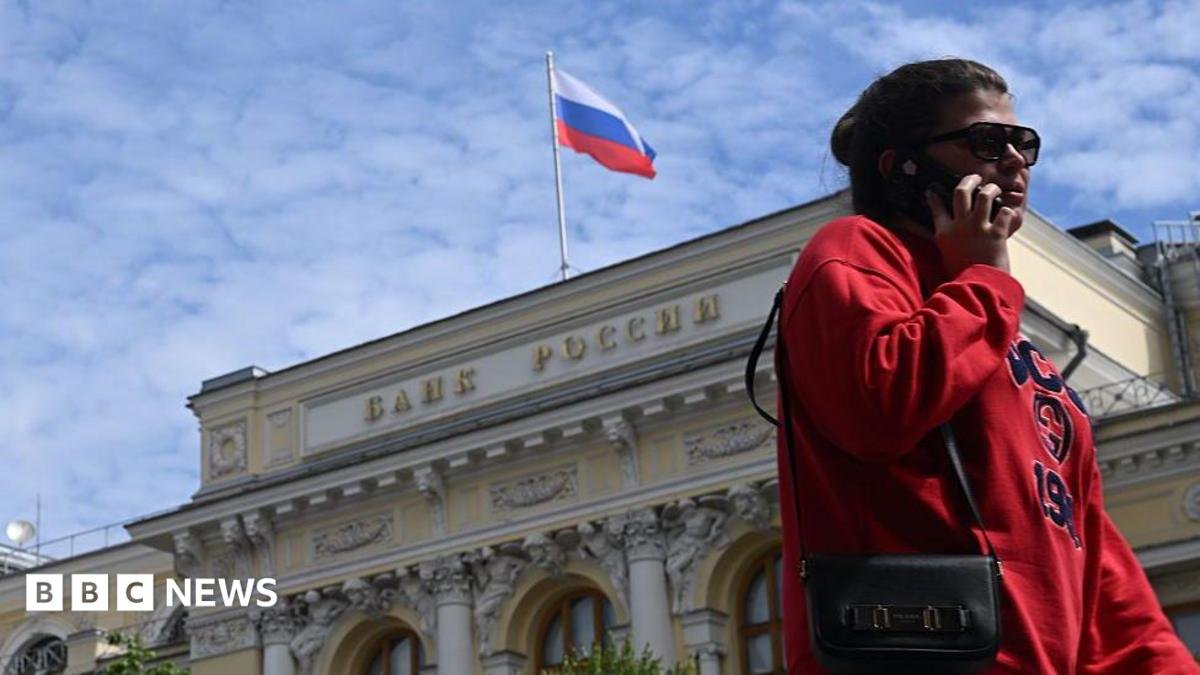
The Soviet-era instinct to keep money “under the mattress” is making a comeback despite double-digit returns on bank deposits, which have been kept high as the central bank battles stubborn, war-fuelled inflation.
A 100,000-rouble (£950; $1,280) one-year fixed-term deposit at Sberbank, Russia’s largest lender, currently pays 10% interest.
Even so, central bank data showed Russians withdrew 550bn roubles from bank accounts in May, including 200bn roubles from fixed-term deposits.
Anton, a copywriter living in Moscow, said a vendor at a vinyl shop offered him a discount for paying in cash. “He was upfront about the reason, higher taxes,” he told the BBC.
When mobile internet shutdowns intensified during heightened security around Russia’s Victory Day celebrations in May, he said he saw people struggling to withdraw money to spend at a flower market in central Moscow.
“There was a woman going from one ATM to another, looking for one that still had banknotes.”
[ad_2]
Source link