

[ad_1]
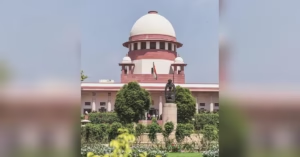
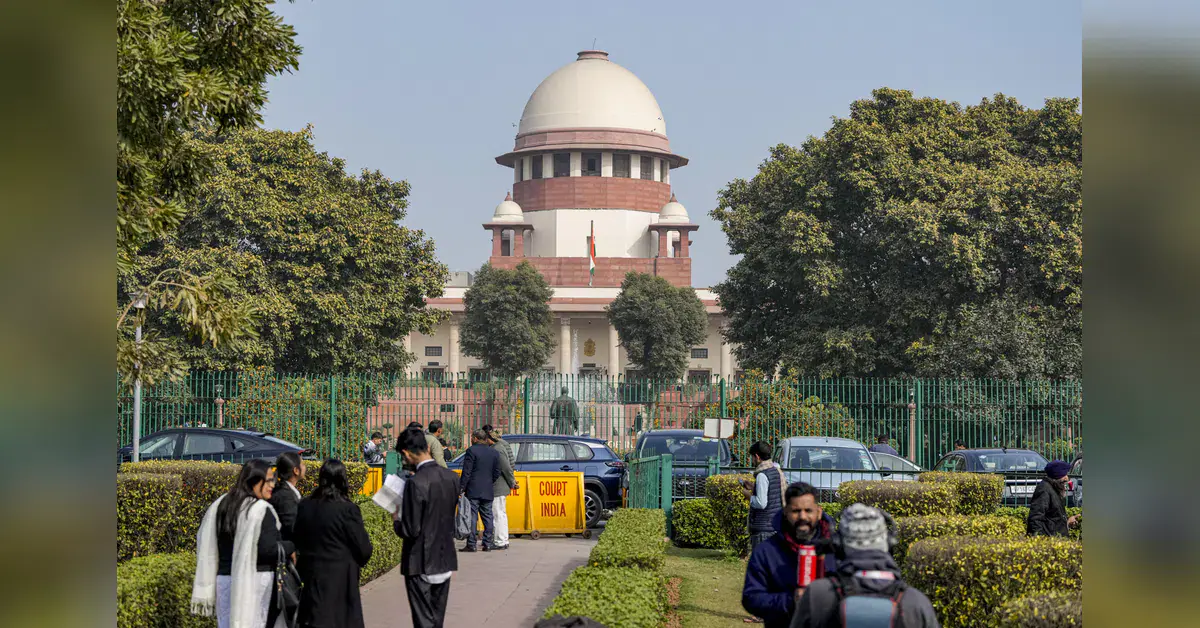
The Supreme Court on Tuesday proposed a 20-point action plan to address industrial pollution in Rajasthan’s Jojari, Luni and Bandi rivers, stressing that the objective should be to create a self-sustaining regulatory framework that functions without repeated judicial intervention.
A Bench of Justice Vikram Nath and Justice Sandeep Mehta suggested constituting a special task force headed by the Rajasthan Chief Secretary and comprising all concerned agencies. The task force will work alongside the existing High-Powered Committee and submit a comprehensive 20-point action plan within three weeks.
“The mechanism should function on ‘auto mode’… Any violation should be detected immediately and corrective action taken without requiring repeated judicial intervention,” Justice Mehta observed.
Expressing concern over the concentration of textile industries along the riverbanks in Pali, the Bench said pollution control would remain difficult as long as industrial units continued to operate in close proximity to the rivers.
Justice Mehta suggested that, in the long term, the industrial area may have to be shifted away from the riverbank, saying such a move would also facilitate planned urban development in the congested city.
The Court directed the state to expedite approvals for effluent treatment plants (ETPs), particularly for industries discharging more than 100 kilolitres a day, while ensuring smaller units are not kept waiting for clearances.
Justice Mehta also questioned the Rajasthan Pollution Control Board’s functioning, noting that its chairperson was simultaneously holding charge of the Mining Department, and suggested appointing a full-time dedicated head for the pollution regulator.
Appearing before the Bench, Rajasthan Chief Secretary Sudhansh Pant Srinivasan assured the Court that the state was committed to achieving “zero untreated industrial discharge”.
He said the government would simultaneously focus on preventing fresh pollution, treating accumulated wastewater, removing sludge, augmenting treatment infrastructure and restoring the rivers.
Seeking three weeks to visit Pali, Jodhpur and Balotra and consult stakeholders, he assured the Court that a comprehensive action plan would be placed before it.
The Bench rejected suggestions that treated industrial water could be discharged into rivers.
“Not even a drop of that tertiary treated water can be allowed in the river,” Justice Mehta said, emphasising that the goal must be zero liquid discharge through recycling and reuse.
Rejecting industry’s concerns over compliance timelines, he remarked, “Technology is available. It’s only a matter of intent.”
The Court also flagged the alleged conversion of residential land into industrial areas in Balotra and cautioned the state against approving new industrial clusters near riverbanks.
Observing that relocation of industries may be necessary, the Bench said, “There is no intention of destroying employment… but not at the cost of the environment.”
The matter will be taken up again on August 7.
[ad_2]
Source link