[ad_1]
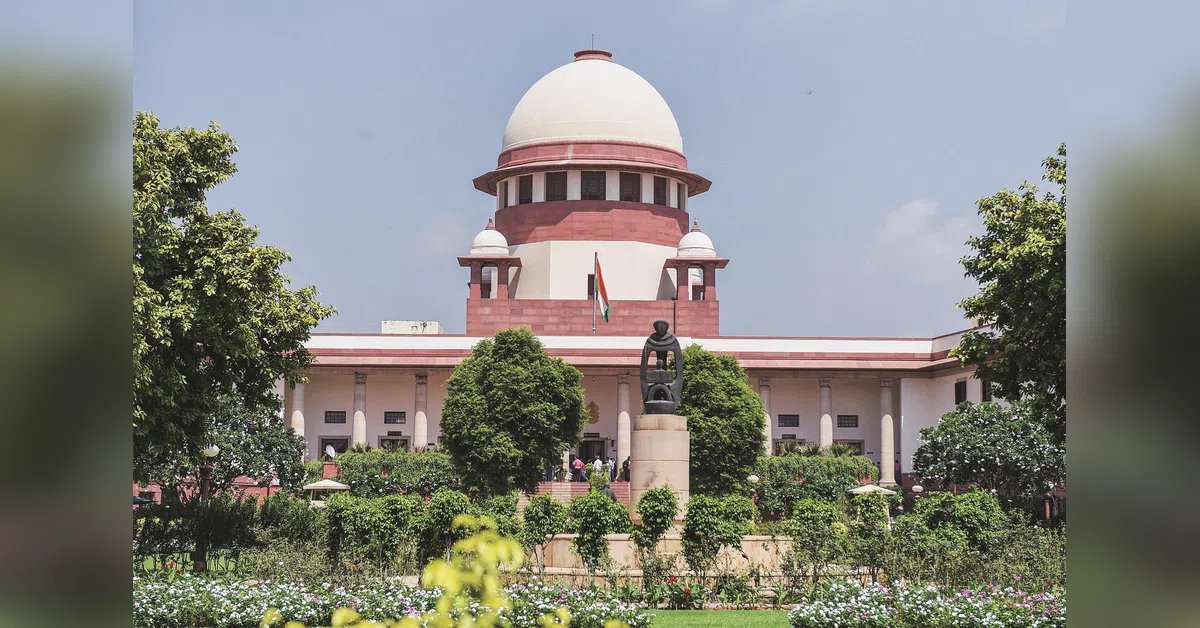
The Supreme Court on Friday issued a set of binding directions to High Courts across the country to tackle delays in the pronouncement of reserved judgments, including prescribing a three-month timeline for delivering decisions after reserving orders.
Stressing the need for greater urgency in matters involving personal liberty, a Bench comprising Chief Justice of India Justice Surya Kant and Justice Joymalya Bagchi said bail applications should preferably be decided and uploaded on the same day. If an order is reserved, it must be pronounced and uploaded the next day.
The Court further directed that orders granting bail or suspending sentences should be communicated to jail authorities immediately so that release can take place, preferably on the same day or, at the latest, the next day, subject to compliance with bail conditions and provided the individual is not required in any other case.
In criminal appeals and death sentence references where the appellant remains in custody, any clarification sought by the Bench after reserving judgment should ordinarily be sought within seven days.
In other matters, such clarification should not be sought beyond one month from the date of reserving judgment.
Recognising that delays in preparing detailed judgments can sometimes cause hardship, the Court permitted High Courts to pronounce the operative portion of an order in urgent matters, including habeas corpus petitions, criminal appeals resulting in acquittal and demolition-related cases.
The reasoned judgment, however, must ordinarily be uploaded within seven days and, in exceptional circumstances, no later than 15 days. The Court also directed that reasoned judgments pronounced in open court should be uploaded on the High Court website within 24 hours.
To improve accountability, the Court instructed Chief Justices of High Courts to put in place a system for monitoring reserved judgments.
High Court websites must generate automated monthly reports identifying pending reserved matters. If a judgment remains undelivered for more than three months, the Registrar General must place the matter before the Chief Justice, who shall bring the delay to the notice of the concerned Bench.
If the judgment is still not delivered, the Chief Justice may reassign the case to another Bench after notifying the parties.
The Court also provided remedies for litigants. Parties may file an application seeking release of a judgment if it remains pending beyond three months. If a judgment is not delivered within four months of being reserved, parties may approach the Chief Justice seeking transfer of the case to another Bench for a fresh hearing.
Similar remedies are available where only the operative portion of a judgment has been pronounced but the reasoned order has not been uploaded within the prescribed time.
The directions were issued while hearing a petition concerning delays in the pronouncement of criminal appeals reserved by the Jharkhand High Court. The petitioners argued that appeals reserved in 2022 had remained undecided for years, violating their right to a speedy trial under Article 21 of the Constitution.
The Court said the guidelines were aimed at ensuring timely justice and strengthening public confidence in the judicial process.
[ad_2]
Source link