


[ad_1]
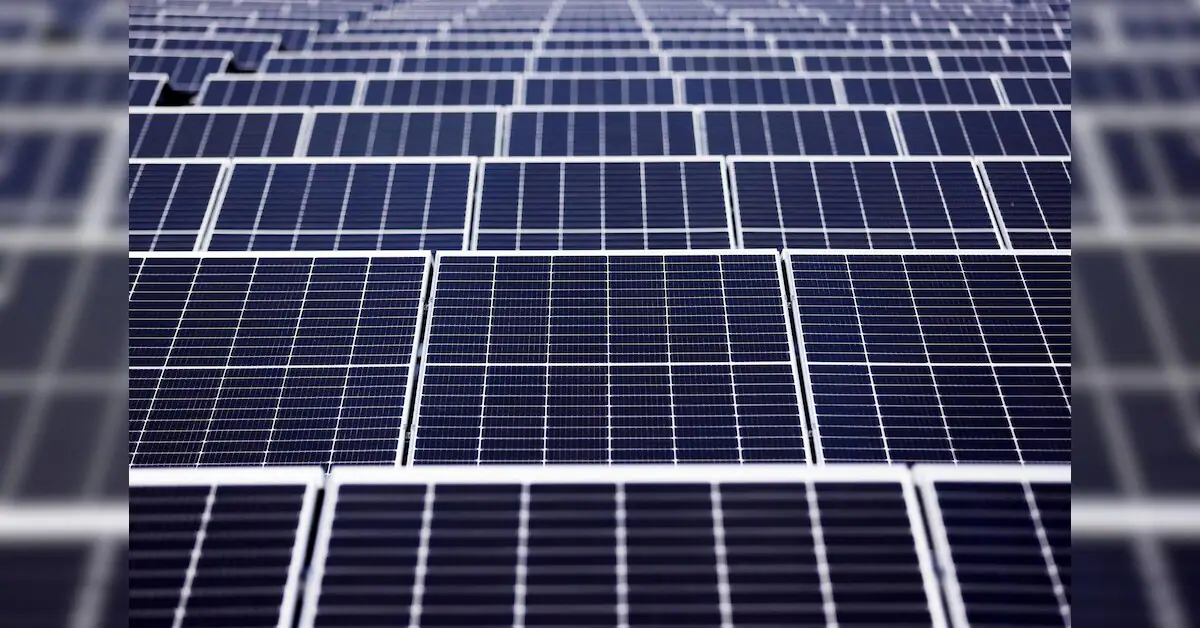
India will have 100 gigawatts (GW) of solar cell manufacturing capacity within a year, increasing from the present capacity of 32 GW, along with 80 GW of wafer and ingot capacity by June 2028, when the approved list of models and manufacturers policy for these upstream components comes into effect, said Santosh Sarangi, secretary, Ministry of New and Renewable Energy (MNRE), at the International Energy Conference and Exhibition (IECE) organised by the Confederation of Indian Industry (CII).
Going further upstream, the government is coming up with a support scheme for encouraging polysilicon manufacturing in the country, he said.
Additionally, Sarangi said the average power procurement cost (APPC) for distribution companies (discoms) can come down from Rs 5.20 per unit currently to Rs 4.85 per unit with increased adoption of combinations such as solar and wind, solar and battery energy storage (BESS), and round-the-clock renewable energy (RE RTC).
“It will make Indian industries more competitive, enable data centres to expand at a much larger scale, and accelerate the green transition and the journey towards net zero,” he said.
Sarangi said the APPC for discoms at a national level has either remained stagnant or declined in the past three years because of the infusion of cheaper renewable energy into their portfolio. Solar Energy Corporation of India’s (SECI’s) latest tender for RE round-the-clock (RTC) power with 90 per cent assured availability in each time block discovered a price of Rs 5.25 per unit, he informed.
Commenting on green hydrogen, he said the government is undertaking several pilot projects to support green methanol supply to the shipping industry, and SECI has floated a tender for 5 lakh tonnes of green methanol to aggregate demand and supply to shipping companies.
He added that several pilot projects with the transport department are being undertaken to assess its feasibility in the transportation sector and with the steel ministry to evaluate its efficacy in direct reduced iron (DRI) plants.
Speaking at the same event, Abhay Bakre, mission director, National Green Hydrogen Mission, MNRE, said that global collaboration in the green hydrogen space is important. “Over the next two to three years, if we can establish at least three or four long-term partnerships, it will be a significant step,” he said, adding that the good thing is that it can promise long-term stability.
“This will enable countries to decarbonise and shield themselves from geopolitical shocks,” he said. However, it will take a few more years before countries naturally develop hydrogen trading partnerships as some issues, including standards, specifications and logistics, still need to be addressed, he added.
Also present at the event, Jishnu Barua, chairperson, Central Electricity Regulatory Commission (CERC), spoke about the additional cost involved in RE integration due to its inherently variable nature. “Increased renewable energy penetration requires higher balancing reserves, more flexible operation of existing thermal plants and advanced forecasting tools, all of which raise operating costs and affect the efficiency of conventional plants,” he said.
He added that significant investments are also needed in transmission infrastructure and energy storage for effective evacuation. Talking about the RE curtailment in recent times, he said, “Sudden fluctuations in the renewable output can destabilise system frequency, sometimes necessitating curtailment to maintain grid security. We already have a number of cases pending in CERC against such curtailments.”
Several major disturbances, particularly in Rajasthan and Gujarat, have already been observed at the interstate level. According to Grid India, between January 2022 and June 2025, 68 such events caused generation losses ranging from 1,000 MW to 7,000 MW, he said, adding that enforcement efforts have reduced the frequency and scale of these events.
[ad_2]
Source link