


[ad_1]
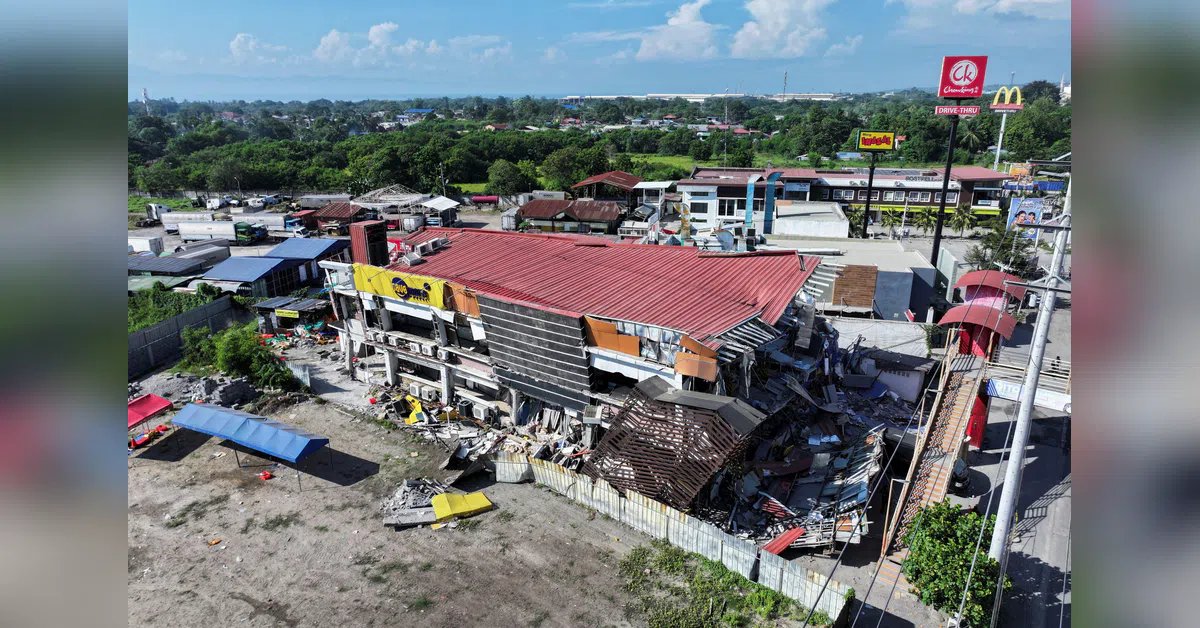
A 7.8-magnitude earthquake struck the southern Philippine island of Mindanao, sparking a tsunami warning. According to the Philippine Institute of Volcanology and Seismology’s initial report, the epicentre was 13km (8 miles) south-west of General Santos city, on the island of Mindanao and had a depth of 10km (6.2 miles).
The Pacific Tsunami Warning Center warned of tsunami waves up to 3 metres (10ft) on some coasts of the Philippines. Waves up to 1 metre (3ft) were possible on some coasts of Indonesia and Malaysia. Warnings of smaller tsunami waves were issued for Taiwan, Japan, Guam, and Papua New Guinea.
However, not all powerful earthquakes trigger tsunami warnings. Why do some quakes generate tsunamis while others do not? Let’s find out.
What is a tsunami?
A Tsunami is a series of giant ocean waves caused by earthquakes or volcanic eruptions under the sea. As the waves travel inland, they build up to higher and higher heights as the depth of the ocean decreases. The speed of waves slows down when reaching shallow waters and does not depend on the distance from the source of the wave.
Tsunami waves are different from regular sea waves which originate from the winds that blow across the near-surface layer of the ocean. Unlike regular wind-generated sea waves, which usually have wavelengths of about 300 to 600 feet, tsunami waves can have wavelengths of about 300 to 600 miles in the deep ocean.
How does an earthquake create a tsunami?
Earth’s tectonic plates are in constant motion. When the surfaces of these plates catch and lock along their boundary, stress builds up over long periods of time. When the stress reaches a breaking point, the plates suddenly slip past one another, releasing tremendous amounts of energy that cause the Earth to shake, which is how most of the earthquakes occur.
If an earthquake is large enough and occurs close enough to the ocean floor, the energy it releases can cause the seabed to suddenly rise or fall. As the ocean floor rises or falls, the water above it is displaced, setting a tsunami in motion.
But not all earthquakes cause tsunamis. Most tsunamis are generated by earthquakes with magnitudes over 7.0 that occur under or very near the ocean and less than 100 kilometres (62 miles) below Earth’s surface. The amount of movement of the ocean floor, the size of the area over which an earthquake occurs, and the depth of the water above the earthquake are important factors in determining the size of a resulting tsunami.
Why shallow undersea quakes are more dangerous
By far, the most destructive tsunamis are generated from large, shallow earthquakes. Shallow quakes originate within 60 km (40 miles) of the Earth’s outer surface. They tend to cause stronger ground shaking and more destruction at the surface as their epicentre or fault line falls near or on the ocean floor. The seismic waves from shallow earthquakes have a shorter distance to travel, so they lose less energy before reaching the surface, resulting in more intense and damaging shaking.
Why even small tsunami waves can be dangerous
Tsunamis with runups over one meter (3.28 feet) are particularly dangerous but smaller tsunamis can also be dangerous. In such situations, low-lying areas such as beaches, bays, lagoons, harbours, river mouths, and areas along rivers and streams leading to the ocean are the most vulnerable.
Why the Philippines is vulnerable
The Philippines is one of the most vulnerable regions for earthquakes as it is located directly on the Pacific Ring of Fire. The Ring of Fire is a string of volcanoes and sites of high seismic activities, due to constantly moving tectonic plates. Sometimes these plates collide, move apart, or slide next to each other, making the region highly geologically active. Roughly 90 per cent of all earthquakes occur along the Ring of Fire, and are dotted with 75 per cent of all active volcanoes on Earth.
This 40,000-kilometre (25,000-mile) ring has a string of 452 volcanoes stretching from the southern tip of South America, up along the coast of North America, across the Bering Strait, down through Japan, and into New Zealand.
What people should do during a tsunami warning
During a tsunami warning, people should immediately move away from the coast and follow official evacuation instructions. Experts advise avoiding construction or settlement within 200 metres of the high-tide coastline, as these areas are particularly vulnerable to high waves. If evacuation is necessary, people should move to ground at least 30 metres above sea level or as far as 3 kilometres inland, where possible.
2004 Indian Ocean tsunami
The 2004 Indian Ocean tsunami hit the Andaman and Nicobar Islands on December 26, 2004, after a 9.2-9.3 magnitude earthquake off the coast of Indonesia. Over 46,000 people were injured, and at least 40,000 were left homeless. Entire islands were submerged, and Trinket Island was divided into two. The heaviest destruction and loss of life were in Indonesia, Sri Lanka, India, Thailand, and the Maldives.
The writer is a 2026 batch Business Standard-Rahul Khullar intern
[ad_2]
Source link