

[ad_1]
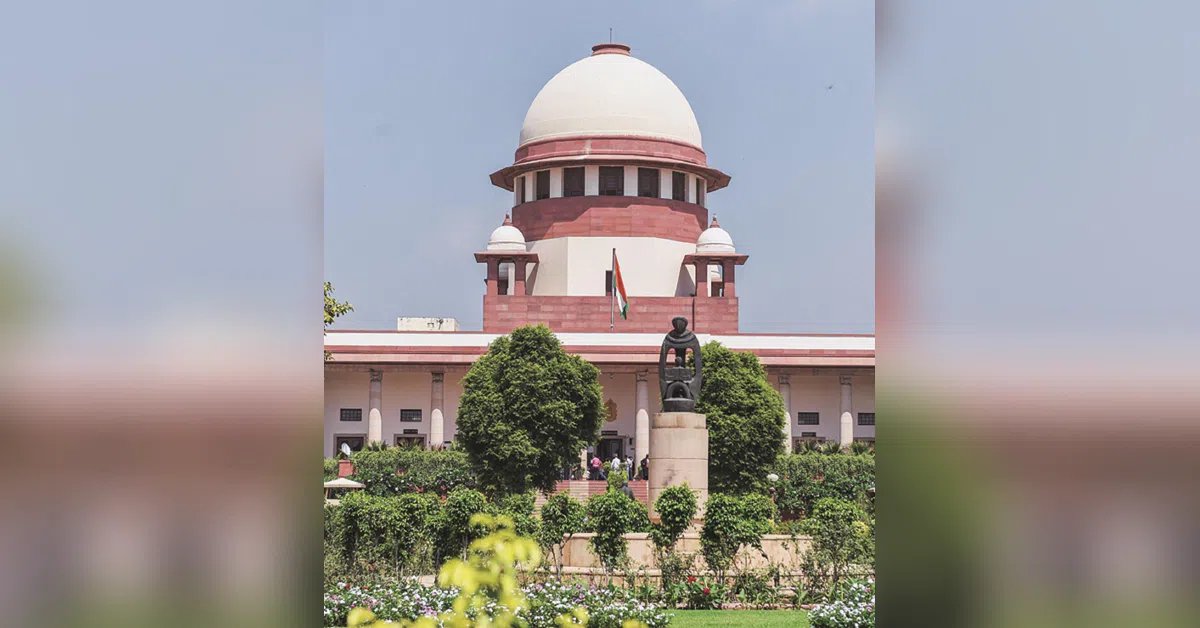
The Supreme Court on Wednesday upheld the legality of the Special Intensive Revision (SIR) of electoral rolls undertaken by the Election Commission of India (ECI), saying that it cannot be said that the ECI has acted in excess of its statutory powers.
A Bench led by Chief Justice of India Justice Surya Kant, along with Justice Joymalya Bagchi and Justice Vipul Pancholi, held that the ECI possesses the authority under Article 324 of the Constitution and Section 21(3) of the Representation of the People (RP) Act to conduct such an exercise.
“We are equally satisfied that the object sought to be achieved by the SIR bears a direct nexus to the constitutional goal of free and fair elections,” the Bench said while pronouncing the verdict, adding that the SIR does not detract from the constitutional obligation of free and fair elections.
Delivering a detailed judgment, the court observed that SIR advances the constitutional imperative of free and fair elections.
“…Free and fair elections do not rest merely upon the mechanics of polling. They fundamentally depend upon the integrity, accuracy and credibility of the electoral rolls, which form the foundation of the democratic process,” the judgment said.
The Bench accepted the reasons cited by the ECI for launching the revision exercise, including the fact that more than four decades had passed since the last intensive revision, the large-scale addition and deletion of names over the years, rapid urbanisation, migration and the resulting risk of duplication and inaccuracies in electoral rolls.
A key issue before the court was whether the ECI could examine questions relating to citizenship during the revision process. On this aspect, the court clarified that the Commission is empowered to conduct such an inquiry only for the limited purpose of deciding whether a person’s name should be included in or excluded from the electoral rolls.
“In view of the statutory requirement under Section 16 of the RP Act, the Commission, in the course of preparing or revising electoral rolls, is undoubtedly empowered to examine questions bearing upon citizenship. However, such an enquiry can only be made from the standpoint of determining inclusion or exclusion from the electoral roll and must be undertaken with due regard to the presumption operating in favour of an elector whose name is already borne on the roll,” the judgment stated.
The court emphasised that such scrutiny does not amount to a final declaration regarding citizenship status. It explained that where the material furnished by an individual “does not inspire confidence or gives rise to doubt”, the ECI may refuse enrolment or initiate deletion proceedings in accordance with law.
However, such action “does not amount to a declaration that the individual is not a citizen of India”.
“The consequence of such a determination is correspondingly limited. It affects the individual’s entitlement to be included in the electoral roll, and thereby their right to participate in the electoral process. It does not, however, operate to divest the individual of claims of citizenship, nor does it foreclose a determination of that question by the competent authority under the Citizenship Act,” the court said.
The Bench further clarified that the final determination of citizenship would continue to rest with the competent authorities under the Citizenship Act. In cases where the Commission is unconvinced about an individual’s eligibility, it may refer the matter to the appropriate authority of the Central government for adjudication.
The court also issued specific directions concerning persons whose names had been deleted from the 2003 Bihar electoral roll on citizenship grounds. It directed the ECI to refer such cases within four weeks to the competent authority under the Citizenship Act, 1955. The authority was asked to complete the adjudication process before the next Assembly or local body elections after giving notice and hearing to the affected persons. If found to be citizens, their names would have to be restored to the rolls.
Additionally, the Bench said individuals whose names may have been wrongly deleted on the ground of absence, despite continuing to reside in Bihar, would be entitled to approach election authorities through representations, which must be considered in accordance with law.
Summarising its conclusions, the court held that the ECI has the statutory and constitutional power to conduct SIR; that the exercise serves the larger goal of free and fair elections; and that the framework contains sufficient safeguards such as notice, hearing, objections, speaking orders and appeals to prevent arbitrary exclusions.
The court rejected the argument that once a person’s name appears in an electoral roll, it becomes immune from future verification. “The presumption continues to operate, but it does not negate the possibility of verification,” the judgment said.
It also found no illegality in the procedure adopted by the Commission. The Bench noted that the ECI had progressively expanded the range of acceptable documents during the exercise and that the process included opportunities for participation, correction and redress.
“The measures adopted bear a reasonable nexus to the objectives sought to be achieved, are not manifestly excessive and are accompanied by sufficient procedural safeguards to prevent arbitrary exclusion,” the court ruled.
The litigation arose from challenges to the Bihar SIR process initiated last year. Petitions filed by organisations including the Association for Democratic Reforms and the National Federation for Indian Women alleged that the exercise enabled arbitrary deletion of voters and risked disenfranchising lakhs of citizens.
The ECI defended the exercise, maintaining that the revision was necessary to ensure that only eligible citizens remained on the electoral rolls ahead of the Bihar Assembly elections. During the course of proceedings, the Supreme Court had also directed the Commission to accept Aadhaar as a valid identity document for inclusion in the revised voter list.
The SIR in Bihar concluded on September 30 last year with the number of electors reducing from 7.89 crore to 7.42 crore. Initial deletions of around 65 lakh names were later reduced to approximately 47 lakh after claims and corrections were processed. Subsequently, the ECI extended the exercise to states including West Bengal, Kerala and Tamil Nadu, leading to further legal challenges that were also considered by the court.
[ad_2]
Source link