

[ad_1]
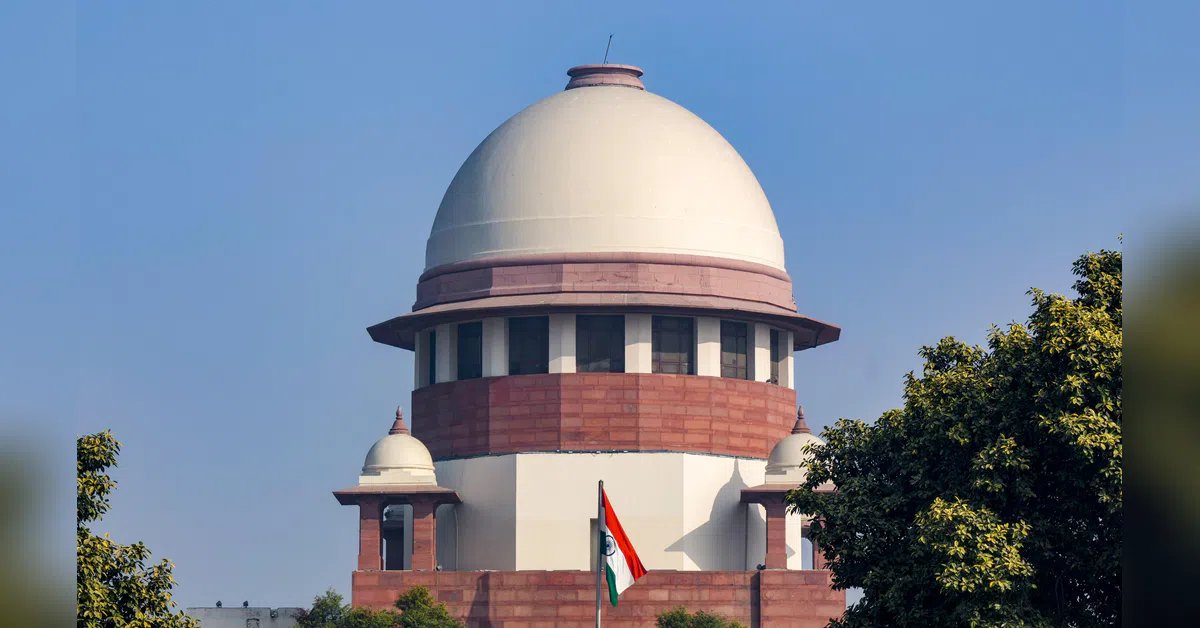
A Bench comprising Chief Justice of India Justice Surya Kant, Justice Joymalya Bagchi and Justice Vipul M Pancholi said the panel should remain compact to function effectively.
“We cannot have a composition of 30 people as it will become unmanageable. The committee must consult experts, and it should have 5-7 members. We will note it in the order,” the Bench remarked.
Appearing for the Centre, Additional Solicitor General Aishwarya Bhati submitted that the Central Empowered Committee and the amicus curiae had proposed a common set of names for inclusion in the panel, which could now be finalised.
Senior advocate K Parameshwar, assisting the Court as amicus curiae (friend of the court), urged that the committee should also factor in the concerns of stakeholders so that the public at large gets an opportunity to be heard.
The apex court had earlier directed the Environment Ministry and other stakeholders to suggest names of domain experts for the proposed panel tasked with defining the Aravalli hills and ranges, regarded as the world’s oldest mountain system.
On December 29 last year, the Court took note of objections raised against the revised definition of the Aravallis and kept in abeyance its November 20 directions approving a uniform definition for the hill range. It had also halted all mining operations in the Aravalli region.
The Court had then observed that several “critical ambiguities” required examination, including whether the criteria prescribing a 100-metre elevation and a 500-metre gap between hills could deprive substantial portions of the Aravalli range of environmental protection.
Earlier, on November 20, 2025, the Supreme Court had accepted the recommendations of a committee constituted by the Ministry of Environment, Forest and Climate Change regarding a uniform definition of the Aravalli hills and ranges. Pending expert reports, it had prohibited fresh mining leases across Aravalli areas spread over Delhi, Haryana, Rajasthan and Gujarat.
The committee had recommended that an “Aravalli Hill” be identified as any landform within designated Aravalli districts rising at least 100 metres above local relief, while an “Aravalli Range” would comprise two or more such hills situated within 500 metres of one another.
This triggered protests, with critics arguing that the arbitrary height criterion excludes over 90 per cent of the Aravalli ecosystem (such as lower ridges and valleys), potentially opening these unprotected areas to large-scale mining and construction, thereby destroying one of India’s oldest mountain ranges.
[ad_2]
Source link