

[ad_1]
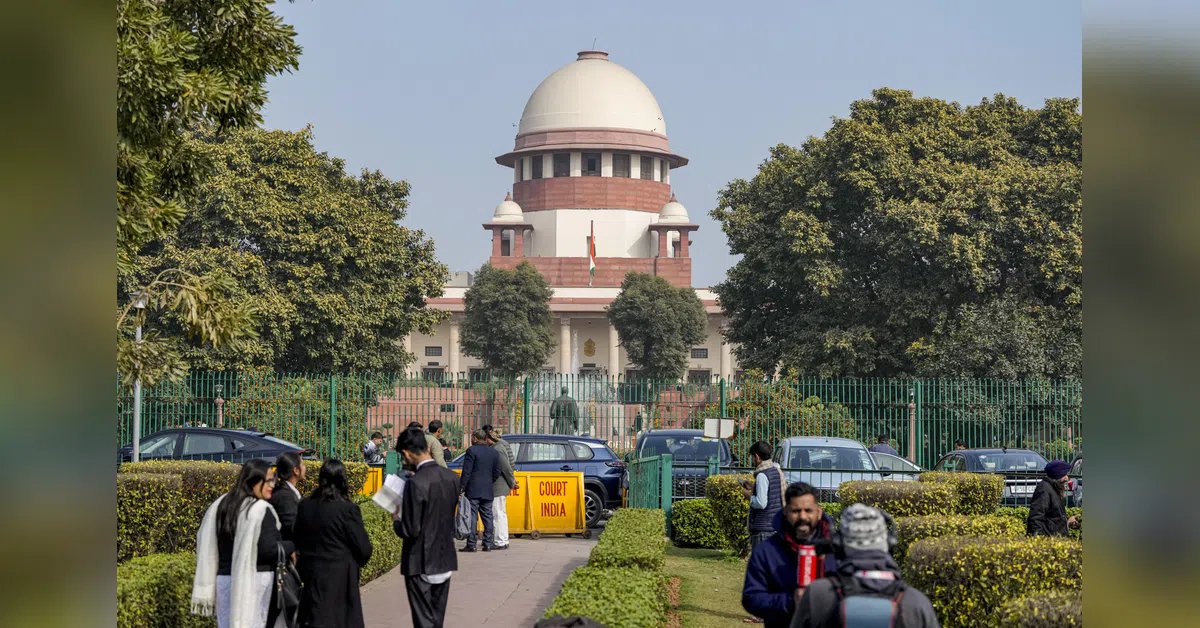
Observing that right to trauma care of citizens is an integral part of right to life, the Supreme Court has stressed on the need to have systemic intervention, a uniform framework for trauma care, and proper good samaritan laws.
The apex court passed a slew of interim directions, including asking all the states and Union territories to complete full technical and operational integration of all emergency or ambulance helplines into Helpline 112 within three months and undertake concurrent mass-media publicity of this helpline and report compliance.
A bench of Justices J K Maheshwari and A S Chandurkar also directed the states and UTs to establish functional (physical and digital) good samaritan grievance redressal systems with designated nodal authorities at state and district level within three months, and furnish periodic compliance reports by organising monthly meetings and uploading the minutes on the concerned portals.
The bench passed the order on Tuesday on a plea filed by Savelife Foundation which raised the need for trauma care to be recognized as a matter of right in the Indian public law system.
The top court said when a person suffers an accident or any such similar incident which requires urgent trauma care, they usually feel shock and disorientation, a sense of helplessness where they have to hope that those around them would somehow help them get the care that they need.
“In such a situation, every minute spent without medical intervention or urgent care significantly narrows the scope for survival. Swiftness, is quite literally, like medicine,” it said.
Referring to different stages of care after such an incident, the bench said a robust mechanism for trauma care must take a “bottom-up approach” which accounts for various stakeholders.
It said usually, no matter how strong the urge to be a good samaritan is, the bystander hesitates, suffers a reactive paralysis, sometimes due to fear of legal proceedings, of getting summoned to police station as a witness and sometimes due to the psychological weight of the situation itself.
“To address these barriers, what is required is a systemic intervention, creation of a uniform framework for trauma care, building public awareness, standardization of first aid skills and proper good samaritan laws; since right to trauma care of citizens is an integral part of right to life enshrined under Article 21 of the Constitution of India,” the bench said.
It permitted the Centre to issue a medical rescue protocol for trauma cases within three months, and directed all the states and UTs to operationalize the same within three months thereof.
“All states/UTs shall ensure full automative industry standard-125 (AIS-125) compliance across all registered ambulances (public and private); mandate Global Positioning System (GPS)/vehicle location tracking device (VLTD) fitment and real-time integration with helpline 112; and conduct periodic structured audits (response times, quality of care, equipment, outcomes) with compliance reporting to a designated union-level authority, within a period of three months,” it said.
The bench asked the Union Ministry of Health and Family Welfare to issue guidelines prescribing the requisite data format for a trauma registry within eight weeks.
It said all states/UTs would establish state trauma registries in conformity, covering all medical facilities and linking the same to a coordinated trauma registry within four months.
Besides passing other interim directions, the bench directed the Centre, states and UTs to undertake sustained, structured, multi-lingual mass-media campaigns covering helpline 112, the good samaritan protection under Section 134A of the Motor Vehicles Act and the grievance redressal system, the cashless treatment scheme (PM RAHAT) with defined obligations and compliance reporting within a month.
“In addition to the above, all states and UTs that have not yet adopted the cashless treatment of road accident victims scheme, 2025 – PM RAHAT, shall take necessary steps to fully operationalize the said schemes within a period of three months…,” it said, and listed the matter after four months.
[ad_2]
Source link