


[ad_1]
A 6.2-magnitude earthquake struck Indonesia earlier today, adding to a week marked by seismic activity across the globe.
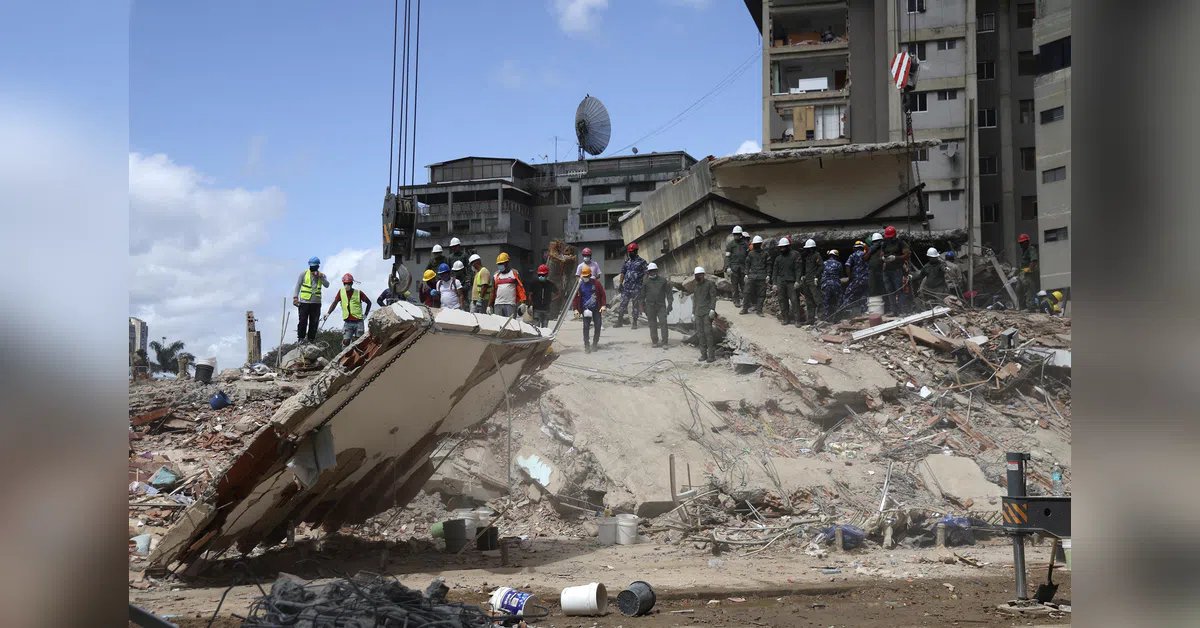
Just days after twin earthquakes measuring 7.2 and 7.5 devastated Venezuela on June 24, killing at least 2,595 people, injuring more than 12,400 and damaging tens of thousands of buildings, tremors have continued to rattle other parts of the world. Japan, one of the world’s most seismically active countries, was also struck by a powerful earthquake on the same day.
While Venezuela suffered widespread destruction, Japan reported limited damage and no major casualties.
The answer lies not entirely beneath the Earth’s surface, but above it, in how cities are built, how building codes are enforced, how quickly warnings reach people and how prepared societies are when the ground begins to shake.
Magnitude isn’t the whole story
The severity of destruction depends on several factors, including the earthquake’s depth, its distance from populated areas, local geology and soil conditions, the duration of shaking, population density and the quality of buildings. An earthquake of similar magnitude can therefore produce vastly different outcomes depending on where and how it strikes.
Buildings, not earthquakes, cause most deaths
People do not die because of earthquakes, but because of collapsing buildings.
Research by the Earthquake Engineering Research Institute (EERI) and the Pacific Earthquake Engineering Research Center (PEER) has consistently shown that well-designed and properly constructed buildings can withstand significant seismic forces, substantially reducing casualties even during powerful earthquakes.
Japan’s earthquake resilience: A closer look
Japan sits at the junction of multiple tectonic plates and experiences about 1,500 earthquakes each year. Yet building collapses remain relatively rare because earthquake resilience has been embedded into the country’s infrastructure over several decades.
Japan’s seismic building standards have evolved continuously, with landmark reforms introduced in 1981 and further strengthened following the Kobe earthquake in 1995 and the Great East Japan Earthquake in 2011. Modern buildings are designed to sway rather than collapse, using technologies such as base isolation systems, seismic dampers and flexible steel frames that absorb and dissipate seismic energy instead of transferring it directly to the structure.
Older buildings have also been progressively retrofitted to improve their ability to withstand strong shaking, while critical infrastructure, including hospitals, bridges and transport networks, is subject to strict seismic design standards.
Every second counts
Japan’s resilience is not limited to engineering.
The country operates one of the world’s most sophisticated earthquake early warning systems through the Japan Meteorological Agency (JMA). A nationwide network of seismic sensors detects the faster-moving primary (P) waves and estimates the arrival of the more destructive secondary (S) waves, providing precious seconds of warning before strong shaking begins.
The alerts are automatically transmitted to mobile phones, television and radio. Although they provide only a few seconds of warning, they are enough to halt high-speed trains, stop elevators at the nearest floor and trigger emergency shutdown procedures at industrial facilities, while allowing people to move away from hazards or take protective cover.
The growing use of smartphone-based earthquake alerts, including Google’s Android Earthquake Alerts System, also provided warnings to many people in Venezuela before the shaking began.
Preparedness is part of everyday life
Infrastructure alone does not explain Japan’s resilience.
Earthquake preparedness is integrated into everyday life. Schools and workplaces regularly conduct evacuation drills, local governments distribute hazard maps, and communities maintain designated evacuation centres and emergency supplies.
Equally important is Japan’s approach to governance. Almost every major earthquake has led to improvements in building regulations, emergency response systems and disaster management policies. Rather than simply rebuilding after disasters, Japan has repeatedly strengthened its resilience by learning from each event.
What can India learn?
India is no stranger to earthquakes. According to the National Disaster Management Authority (NDMA), nearly 59 per cent of the country’s landmass is vulnerable to earthquakes of moderate to very high intensity, with several major cities falling in the highest seismic hazard zones.
India already has earthquake-resistant design standards prescribed by the Bureau of Indian Standards (BIS), along with detailed guidelines issued by the NDMA. However, the country’s challenge is not the absence of regulations, but ensuring they are consistently implemented on the ground.
Regular structural audits, large-scale retrofitting of vulnerable infrastructure and stronger enforcement by local authorities remain key priorities.
As India continues to urbanise rapidly, the risks are also evolving. The World Bank and the United Nations Office for Disaster Risk Reduction (UNDRR) have warned that growing cities, ageing infrastructure and informal construction can amplify earthquake losses if resilience is not built into planning.
[ad_2]
Source link