

[ad_1]
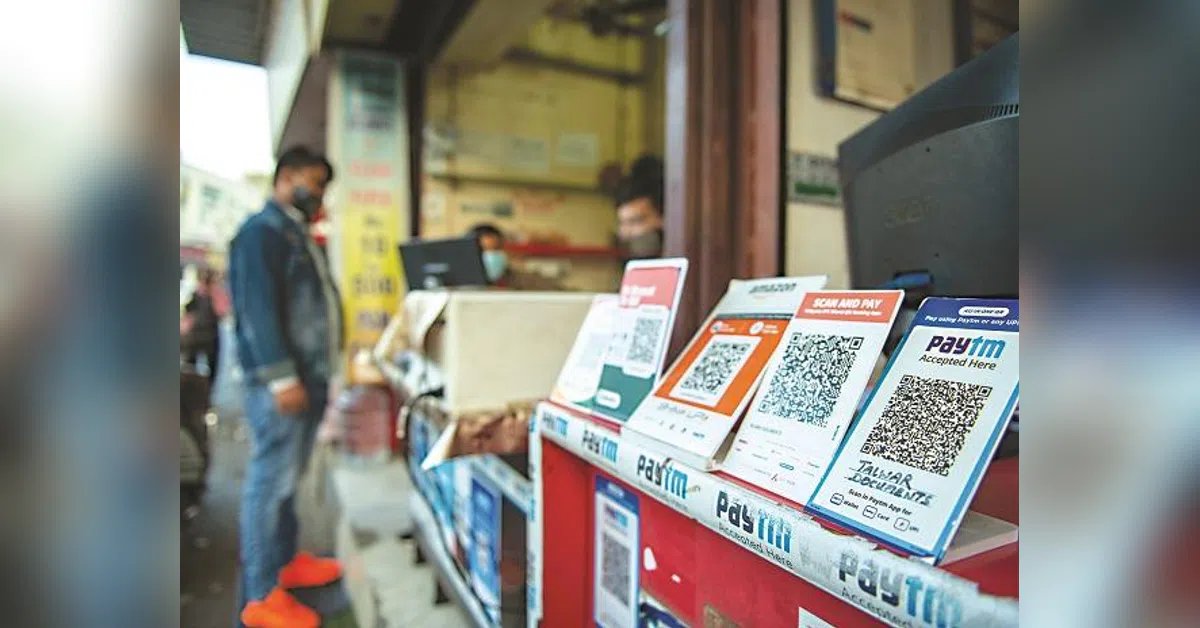
India’s digital payments revolution is rewriting how millions transact every day. Unified Payments Interface (UPI), the country’s flagship real-time payments system, now processes billions of transactions each month, powering everything from roadside tea stalls to utility bills and ecommerce purchases.
Yet even as UPI scales record highs, the physical cash in circulation has also increased.
Reserve Bank of India (RBI) data shows currency in circulation touched fresh highs in May 2026, extending a long-running trend that has puzzled economists and policymakers. The coexistence of rapid digital-payment growth and rising cash holdings presents a paradox at the heart of India’s economy.
India’s cash-UPI paradox in numbers
UPI recorded its strongest month ever in May 2026, processing 23.2 billion transactions worth ₹29.9 trillion, according to National Payments Corporation of India (NPCI) data. Transaction volumes rose 24 per cent year-on-year, while transaction value rose 19 per cent. More than 700 banks are now connected to the UPI network, underlining its reach across India’s banking system.
At the same time, RBI data shows currency in circulation has continued to rise. Currency in circulation stood at about ₹42.8 trillion on May 15, up roughly 11.5 per cent from a year earlier. It has already increased nearly 3 per cent in the opening weeks of FY27.
One reason the contradiction appears sharper than it is lies in the different functions money performs.
UPI is strongest in high-frequency, low-value payments — groceries, QR-code merchant transactions, utility bills, peer-to-peer transfers, transport payments and food delivery purchases. In these categories, digital payments have clearly displaced large volumes of transactional cash usage.
“The increase in digital transactions in volume terms suggests that more and more ordinary people are taking it up. But the average transaction remains small in value terms, which suggests that the greater proportion of digital transactions is still small in value, especially UPI, which is widely used now,” development economist Jayati Ghosh told Business Standard.
Ghosh argued that a significant share of larger-value and informal transactions continues to rely on cash, helping explain why currency demand remains elevated despite the growth of digital payments.
Why households still prefer holding cash
According to the RBI’s annual report for 2025-26, the central bank conducted a survey on households’ payment behaviour among individuals and small retail sellers to understand usage and preference for cash and digital modes of payment. The survey results indicated continued strong preference for usage of cash.
For many households, cash remains a form of financial comfort — easily accessible during emergencies, network outages, medical needs, travel disruptions or banking downtime. Even digitally active consumers often keep cash at home as backup liquidity.
The Covid-19 pandemic further reinforced precautionary cash-holding behaviour. During periods of uncertainty, households across income groups increased cash withdrawals and savings buffers, a habit economists say has not fully reversed.
In smaller towns and semi-urban areas, consumers may receive income digitally but continue using cash for local purchases where acceptance infrastructure remains inconsistent.
“Many poor individuals still do not have smartphones and therefore cannot use UPI,” said Ghosh.
Economist Abhirup Sarkar seconded this. “It is not only the informal economy but also the lack of access to bank accounts and the internet for a sizeable number of people,” he told Business Standard.
The other reason for cash prevelance, according to Sarkar, is that some people do not want transactions to be recorded. “Some people do not want to pay tax and therefore do not want to record their transactions,” he said. “As long as these factors remain, I do not think cash will disappear completely. It will continue to exist in the economy. However, the proportion of cash transactions is likely to decline further.”
India’s informal economy still runs partly on cash
India’s labour-market structure is another major reason cash demand remains resilient.
According to the latest Periodic Labour Force Survey (PLFS), more than half of India’s workforce remains self-employed, though the share declined from 58.2 per cent in 2023 to 56.2 per cent in 2025. A substantial portion of economic activity continues to operate through small enterprises, own-account workers, informal labour arrangements and local supply chains, where cash remains common.
“In an economy like India, growth in GDP will naturally translate to increasing use of cash. Much of India’s workforce is yet to migrate to digital platforms, which will continue to deal in physical currency transactions,” said Sarkar.
Why cash-to-GDP ratio matters
Economists also caution against interpreting rising currency levels in isolation. As India’s economy expands, total transaction volumes rise across both digital and physical channels. Higher nominal GDP, inflation, rising incomes and consumption growth can all increase the economy’s liquidity requirements.
That means digital payments and physical currency can grow simultaneously without necessarily contradicting each other.
Some economists argue that the cash-to-GDP ratio is a more meaningful long-term indicator than absolute currency levels alone. While the stock of currency may rise in nominal terms, the ratio relative to the size of the economy can still stabilise or moderate over time.
“It’s not right to look at the absolute value of cash that is in circulation – which is likely to increase along with the increases in GDP – but it’s the ratio (cash to GDP) that is important,” Sarkar said.
RBI data shows the cash-to-GDP ratio declined to 11.1 per cent in FY25 from 11.5 per cent in FY24 and remained well below the pandemic peak of 14.4 per cent in FY21. While cash in circulation has continued to rise in absolute terms, its importance relative to the size of the economy has moderated.
Sarkar said with the rise of GDP, one would expect a rise in cash transactions as well. “When we have a reasonable amount of growth, the demand for cash is likely to increase. RBI or the government do not control the cash in circulation: it’s driven by demand,” he said.
The bigger lesson
UPI may have transformed how Indians pay, but it has not transformed all the reasons Indians hold money. As long as cash continues to serve as a store of value, emergency reserve and backbone of parts of the informal economy, digital payments and physical currency are likely to grow side by side.
[ad_2]
Source link