


[ad_1]
“O! The mad torrents of the Luit,Where are you rushing toWith a thunderous roarIn a deathly garb repeatedlyWho are you chasing…”Penned by the ‘Bard of the Brahmaputra’ Bhupen Hazarika in 1968, these haunting lines remain as relevant today as they were more than five decades ago. Hazarika’s ode to the mighty Brahmaputra or the Luit, as it is affectionately called in Assam, captures not just the river’s grandeur but also its terrifying power.Every year, as the southwest monsoon gathers strength, the river swells, changes course and reminds millions living along its banks that nature can be both life-giving and unforgiving.For Assam, floods are not merely a seasonal event. They are an annual reality that uproots families, washes away livelihoods and forces people to rebuild their lives over and over again.For many of us, the arrival of the monsoon is wrapped in nostalgia. It brings memories of paper boats sailing through puddles, steaming cups of tea, hot pakoras and the hope of a surprise school holiday. But those memories belong only to one side of the season.For a farmer, the rains determine whether months of hard work will yield a harvest or end in ruin. For a street vendor, relentless downpours can wipe out an entire day’s earnings.For families living along the banks of the Brahmaputra and its tributaries, every spell of heavy rain comes with a haunting question: Will our home still be standing tomorrow?
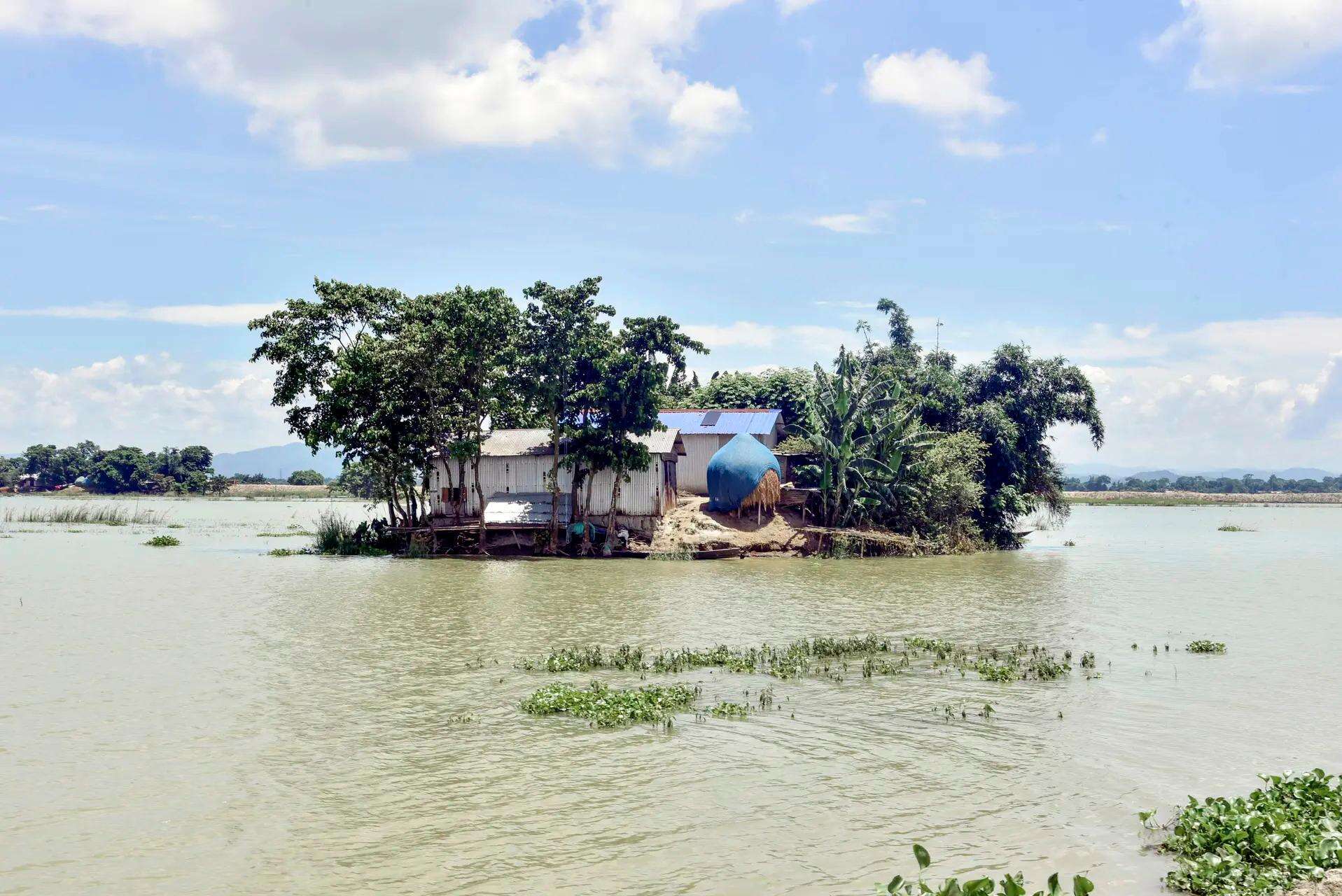
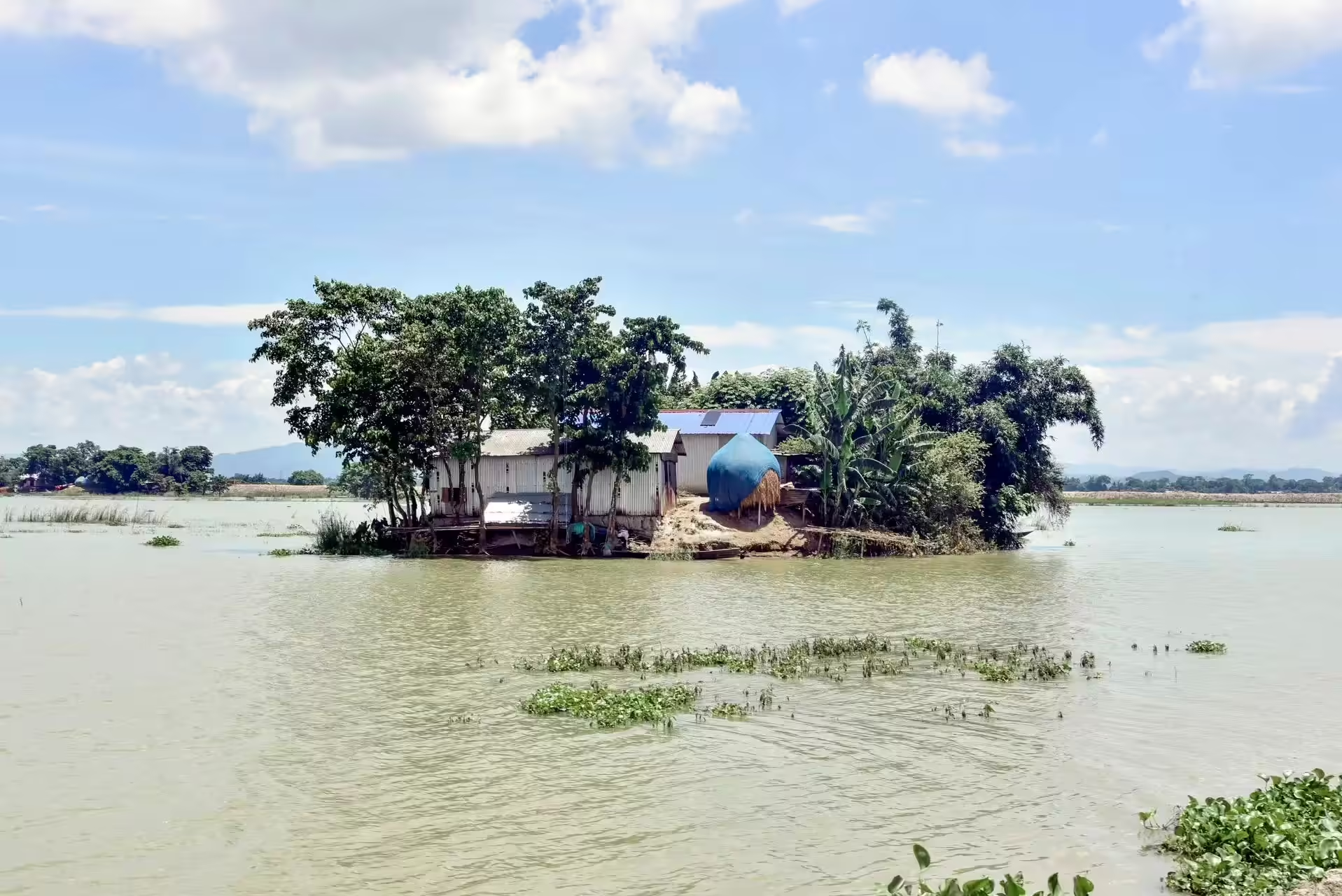
Morigaon Assam, (ANI)
That question has once again become a reality across the North-east. The latest flood bulletin issued by the Assam State Disaster Management Authority (ASDMA) paints a grim picture. Nearly 48,500 people have been affected across Biswanath, Dhemaji, Dibrugarh and Nalbari districts as rising waters continue to inundate villages.Dhemaji remains the worst-hit district, accounting for more than 44,000 affected residents, while Dibrugarh and Biswanath have also reported extensive damage.
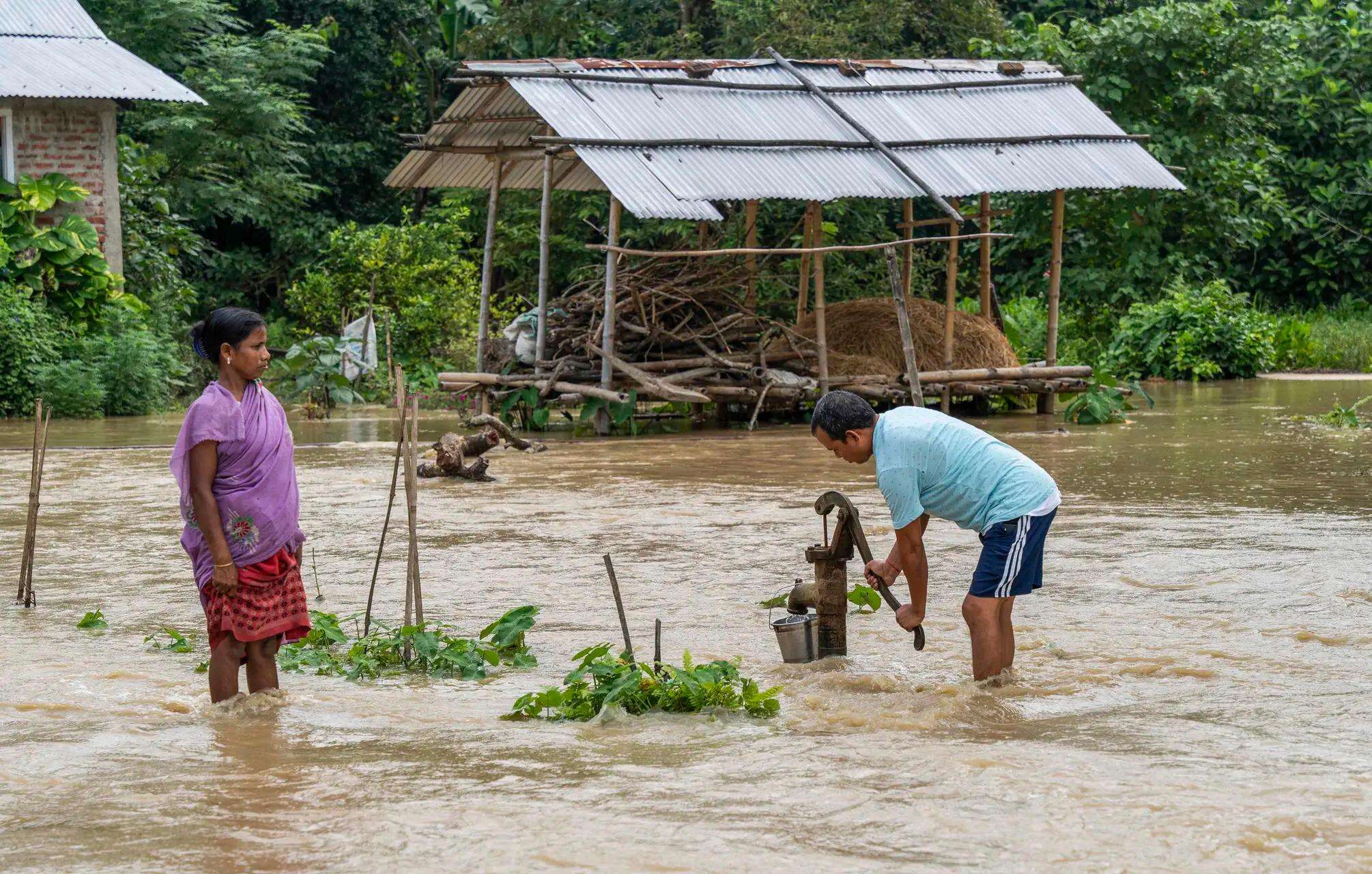
Weather in Assam (PTI)
According to ASDMA, floodwaters have submerged 179 villages and damaged more than 2,117 hectares of agricultural land, dealing a severe blow to farming communities already dependent on the monsoon for their livelihoods.Roads, bridges, embankments and other public infrastructure have also suffered extensive damage, disrupting connectivity across several districts.The Brahmaputra is flowing above the danger mark at Neamatighat, while floodwaters have affected more than 82,000 domestic animals and poultry, adding another layer of distress for rural households that depend on livestock as a crucial source of income.
Floods hits Assam (ANI)
The human cost extends far beyond official numbers. Across the floodplains, families have watched water creep into their courtyards before entering their homes.Belongings have been hurriedly shifted to higher shelves, children carried to safer ground, and cattle untied in the hope they might survive. In many villages, people now spend their days waiting for relief boats while keeping a constant watch on the rising river.One resident, Mina, described the devastation in simple yet heartbreaking words. “The situation is grim. My cattle are all scattered in so much flood. My house is by the banks. The erosion has reduced the land. Houses, roads, crops, everything is destroyed.”Her words echo the experience of thousands of families across the state, where the river not only floods villages but also eats away farmland through relentless erosion, shrinking the very land people depend on for survival. The experience is similar for countless people across several states in the North-east.
Every morning begins with uncertainty. Drinking water has to be fetched from wherever it is available, and every household item is moved higher as the water level rises. Nights are the hardest, with little sleep as families keep listening to the sound of the river, wondering if the embankment will hold till dawn.
Devika
Recognising the scale of the crisis, the Assam government has intensified relief operations. Chief minister Himanta Biswa Sarma said the state was mobilising all available resources to support affected families, particularly in Dhemaji district.“Since the flood situation has unfolded in Dhemaji, I’ve been closely monitoring the situation. We are deeply saddened by the impact it has had on the lives of our people and in this difficult time, we firmly stand with them,” Sarma said in a post on X.He added that the government is “mobilising all its resources to prioritise the immediate safety and long-term rehabilitation of all families affected.”The floods have also severely disrupted transportation. Train services between Archipathar and Simen Chapari stations remain suspended after massive riverbank erosion destabilised one of the piers of a railway bridge.
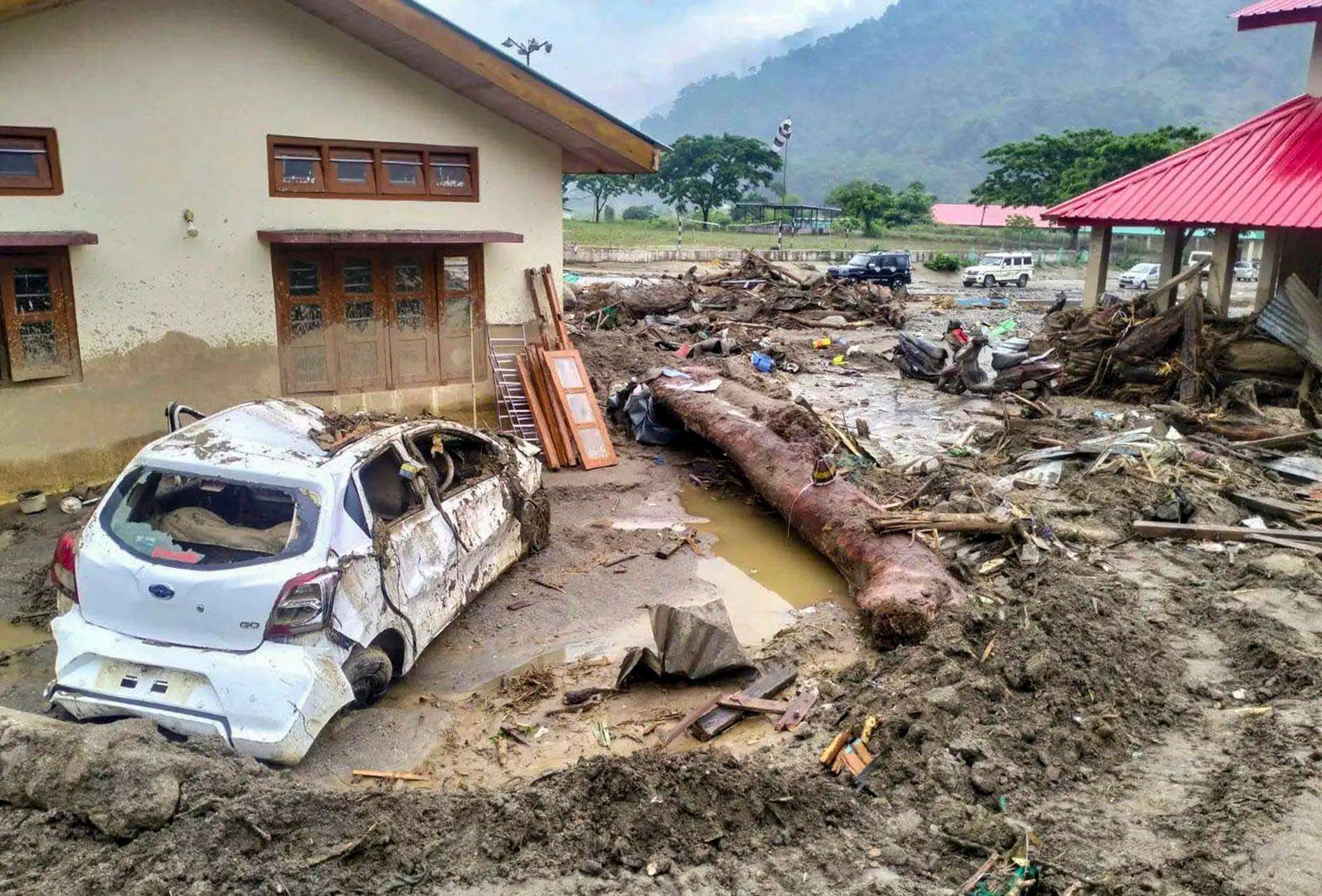
Flash flood leaves trail of destruction in Arunachal Pradesh (PTI)
According to the Northeast Frontier Railway (NFR), the bridge, originally built in 1965 and later converted to broad gauge, remained structurally sound until heavy rains washed away a large section of the riverbank supporting one of its piers.As a precaution, train services between Murkongselek and Silapathar have been suspended until further notice. Authorities have arranged bus services for stranded passengers while help desks have been opened at Dhemaji, Silapathar and Murkongselek stations.For many residents, however, the greatest concern isn’t delayed journeys, it’s whether they will have a home to return to once the waters finally recede.
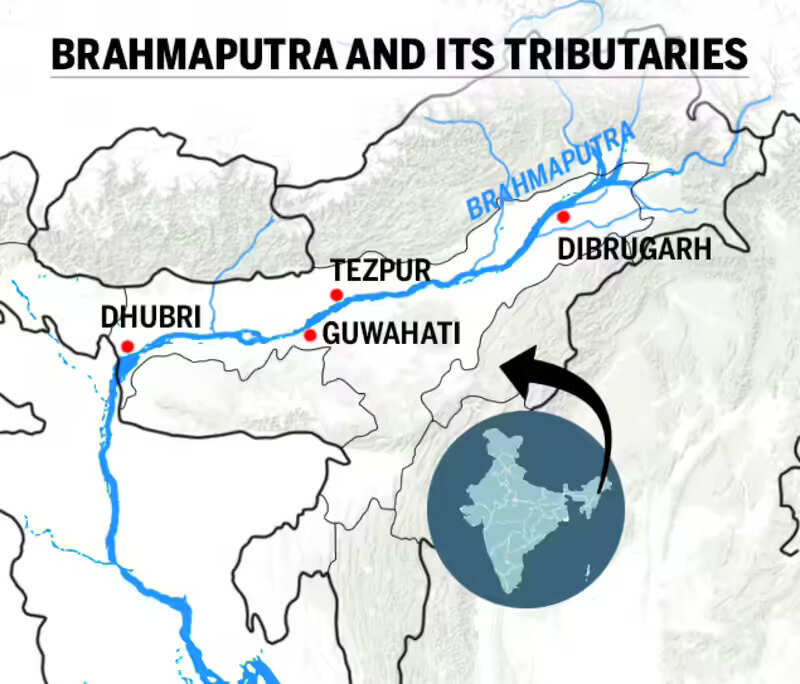
Luit and its tributaries
Flood crisis deepens beyond Assam
The crisis is not confined to Assam alone. Across the Northeast, relentless monsoon rains have unleashed floods, landslides and flash floods, disrupting normal life and exposing the region’s fragile geography.In Arunachal Pradesh, fresh floods and landslides have damaged homes, roads and agricultural land across West Kameng, Upper Subansiri and Tirap districts.According to the state disaster management authorities, more than 94,000 people across 333 villages in 26 districts have been affected in the current spell of rain-triggered disasters.
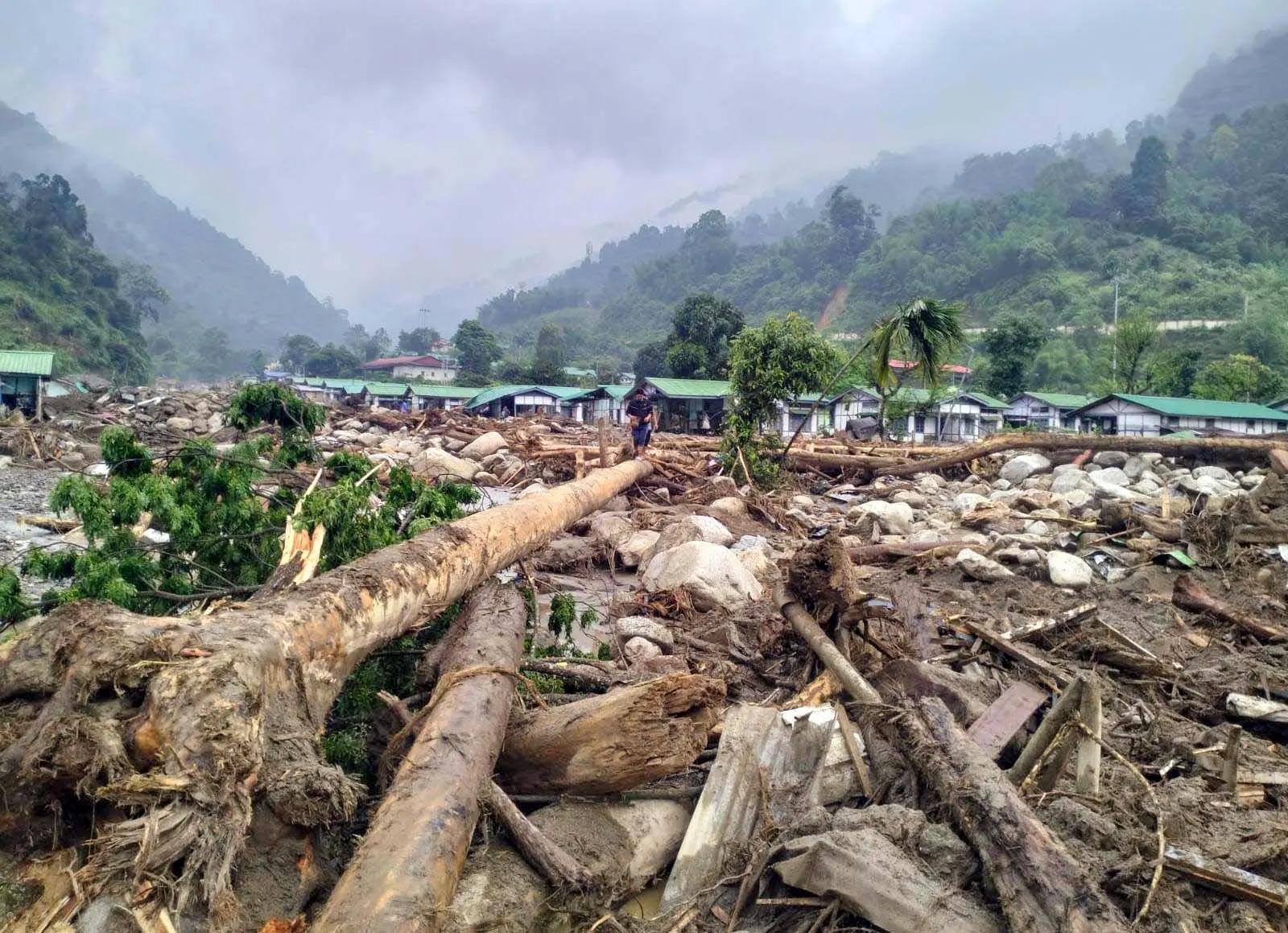
Keyi Panyor, Arunachal Pradesh (ANI)
The death toll in the latest wave of floods and landslides has risen to seven after the body of a missing woman was recovered in Papum Pare district. Villages across Upper Subansiri and West Kameng continue to battle damaged roads, disrupted communication and extensive losses to crops and public infrastructure.Neighbouring Mizoram has also been grappling with the impact of incessant rainfall. In Lunglei district, bordering Bangladesh, more than 80 families were evacuated after the Khawthlangtuipui river overflowed. Landslides and rockfalls have been reported from at least 29 locations, cutting off key road links.
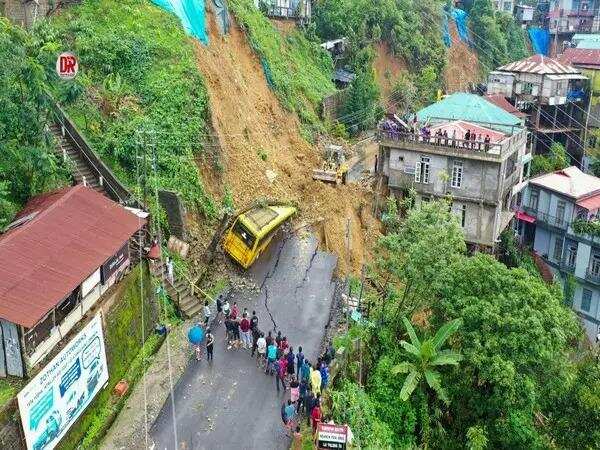
Mizoram
A massive landslide near Bualte village has blocked National Highway-54, leaving tourists stranded for days, while the road connecting Lawngtlai and Siaha districts remains inaccessible. The Aizawl-Thenzawl-Lunglei highway has also been disrupted following fresh landslides and rockfalls.In Tripura, heavy rainfall has damaged more than 4,000 houses, forcing nearly 11,000 people into relief camps. Waterlogging has paralysed low-lying areas, traffic has been disrupted across several towns, and authorities continue to monitor rivers as rainfall persists.
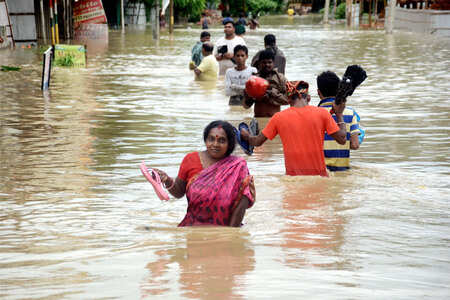
Agartala (PTI)
Even Meghalaya, often celebrated as the “Abode of Clouds”, has been placed on high alert following continuous rainfall. Chief minister Conrad K Sangma has directed all district administrations to remain on alert and prioritise restoration of damaged roads and relief distribution.“I have directed the administration to remain on high alert as rain is forecast to continue, to work in close coordination with the block-level response teams and the line departments, to restore affected road connectivity on priority, and to ensure relief reaches every affected family without delay,” Sangma said after reviewing the situation with deputy commissioners.Landslides and flash floods have affected at least 32 villages, while the India Meteorological Department (IMD) has issued an orange alert, warning of continued heavy rainfall over the coming days.
More rain on the way
The IMD has warned that widespread rainfall is likely to continue across Arunachal Pradesh, Assam, Meghalaya, Nagaland, Manipur, Mizoram and Tripura through the coming days.The weather office has cautioned that persistent rainfall could trigger fresh flash floods, waterlogging, slow vehicular movement and landslides, particularly in vulnerable hilly regions.Heavy rainfall has also been forecast over parts of Bihar, Uttar Pradesh, West Bengal, Delhi, Haryana, Himachal Pradesh, Uttarakhand and Jammu and Kashmir, while thunderstorms accompanied by lightning and gusty winds are expected across several central and southern states. For residents living along riverbanks, every weather bulletin now carries consequences that extend far beyond inconvenience.
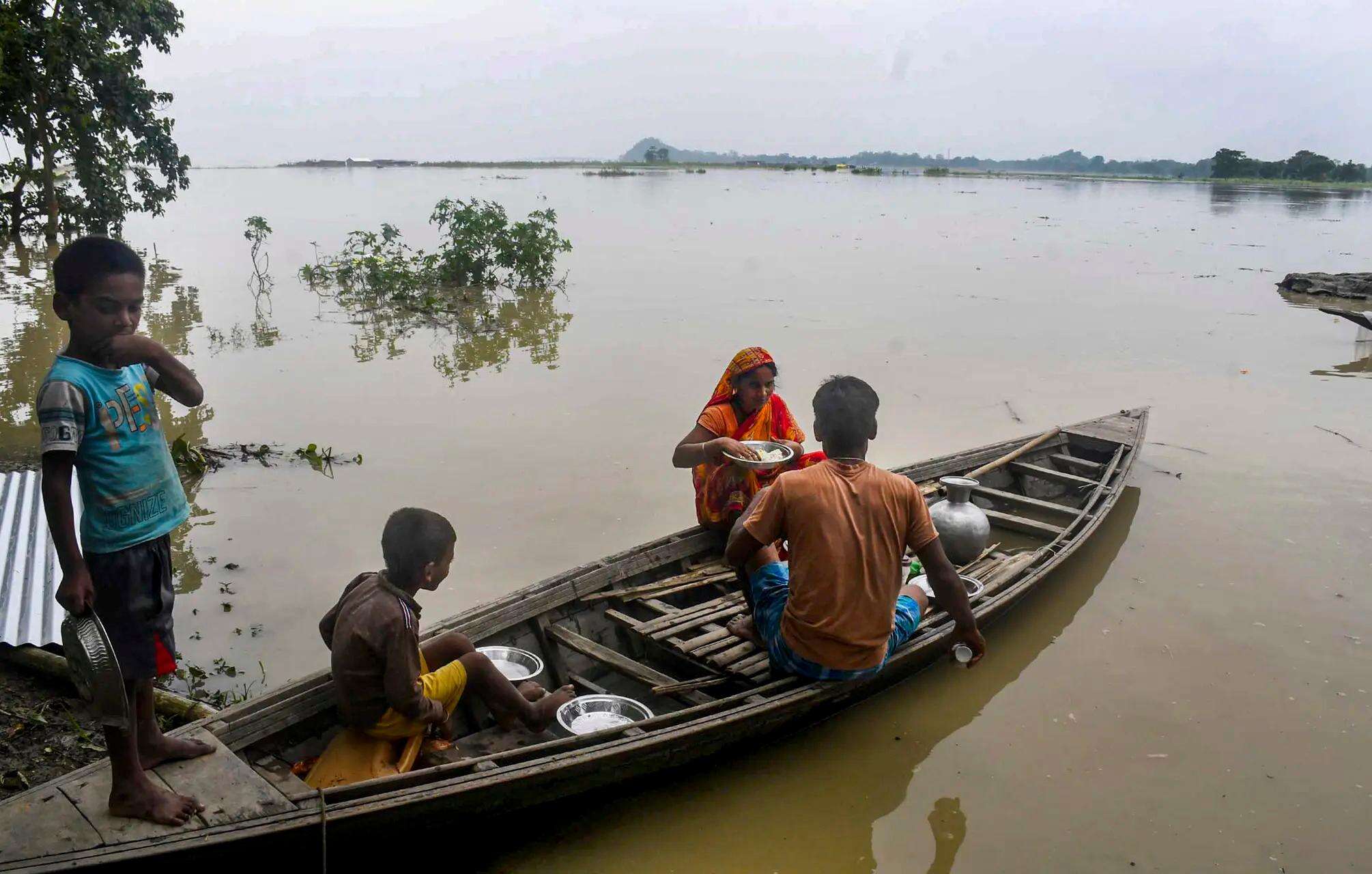
Flood in Assam (PTI)
Assam’s relationship with floods is as old as the Brahmaputra itself. But official figures show the scale of the tragedy has remained staggering over the years.According to data tabled in the Assam Legislative Assembly, 1,476 people lost their lives due to floods, landslides, storms and lightning in the state between 2016 and 2025.Replying to a query by Congress MLA Rekibuddin Ahmed, Assam Revenue and Disaster Management Minister Keshab Mahanta said that 836 people died in floods, while 372 lost their lives due to lightning during the 10-year period.
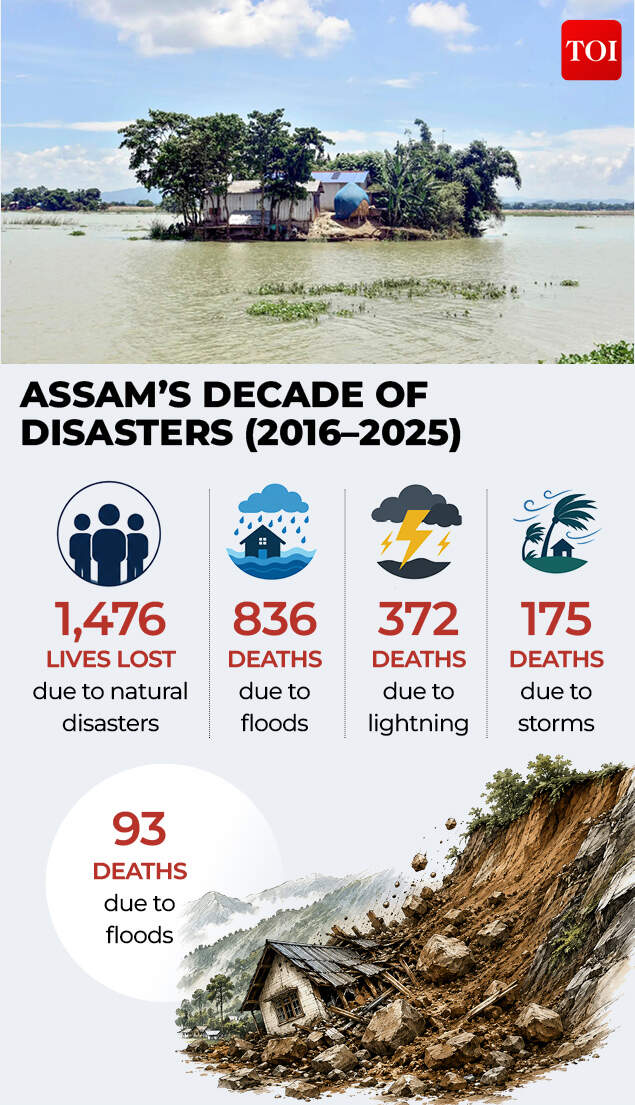
The minister added that 93 people died in landslides and 175 were killed in storms, highlighting the heavy toll natural disasters have taken on the state over the past decade.Districts such as Morigaon, Cachar, Nagaon, Barpeta, Dibrugarh, Sonitpur, Golaghat and Darrang have repeatedly featured among the worst affected. The numbers tell one story.The people living along the Brahmaputra tell another.Each year they repair damaged homes, reclaim eroded farmland, rebuild embankments and begin again, knowing another flood season is never too far away.
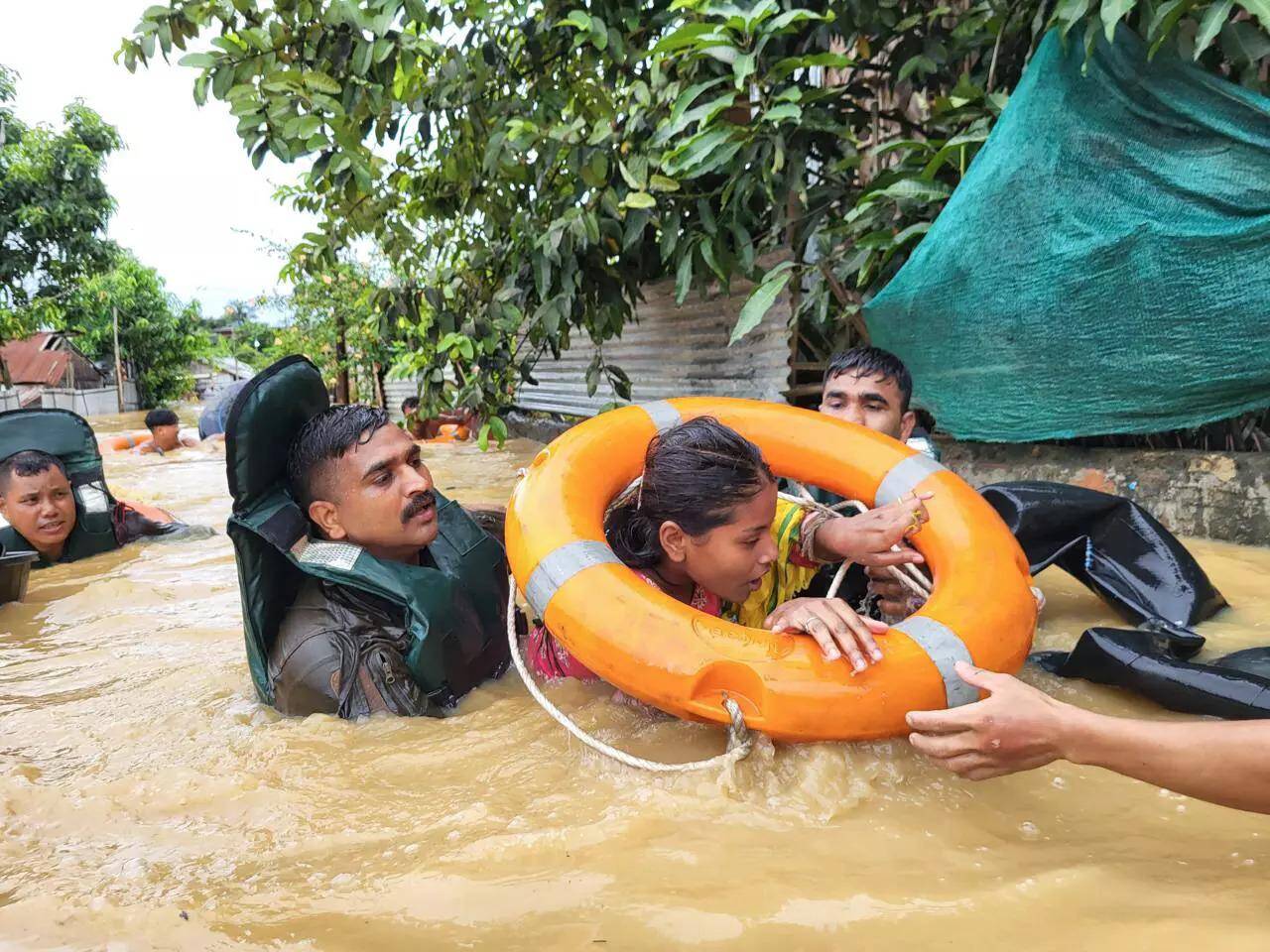
North East (ANI)
India’s flood early warning system has become increasingly sophisticated over the years. Satellite imagery, Doppler weather radar, automatic weather stations and rainfall data are first analysed by meteorologists to assess whether heavy rainfall is likely.That information is then passed to hydrology experts, who estimate how rivers are likely to respond. The data is combined with inputs from the Central Water Commission and processed through hydrological models before warning levels are issued to state authorities.These alerts have significantly improved preparedness and evacuation planning. But forecasting a flood is very different from preventing one.As changing rainfall patterns become more intense and rivers carry larger volumes of water over shorter periods, disaster management alone cannot eliminate the risks faced by vulnerable communities.
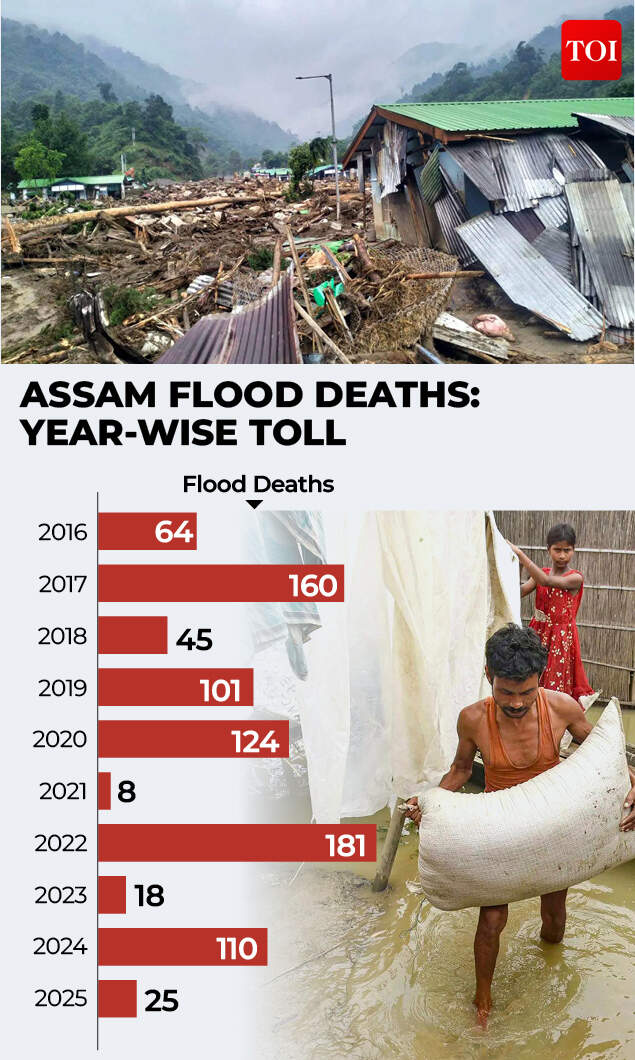
Assam’s decade of disasters
When the river rises again
During rescue operations near Simen, one local resident searching alongside NDRF personnel summed up the anxiety many families continue to live with.“We accompanied the NDRF team to Anand Nagar Ghat to look for a missing person, but despite our efforts, we couldn’t find him,” a local from Simen told TOI.For many families, floods are not measured only by water levels or official bulletins. They are measured in missing relatives. In washed-away homes.In cattle that never return and in fields that disappear into the river overnight.
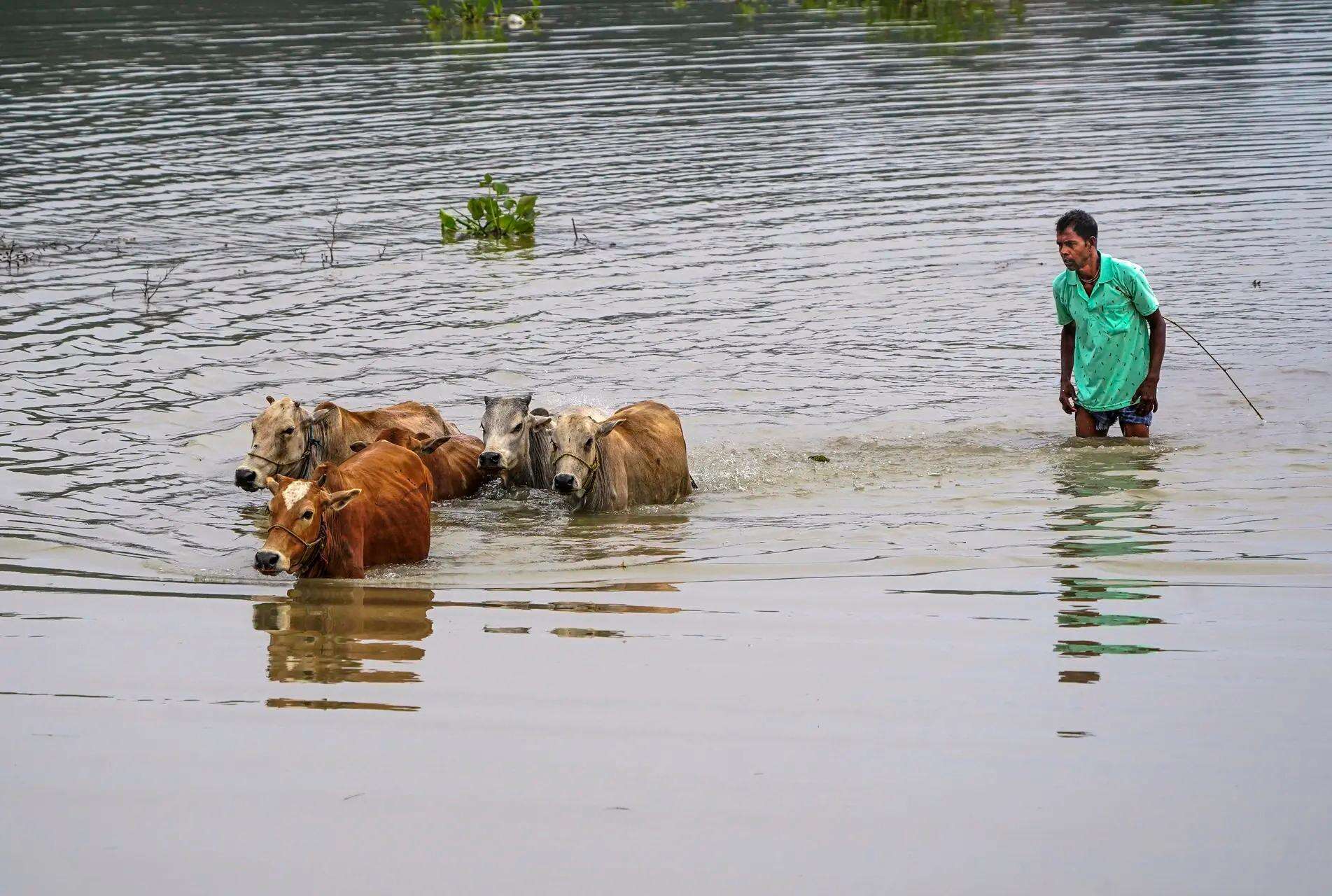
(Flood) PTI
On July 11, an eight-year-old boy, Kamil Hossain Majumdar, drowned after falling into a rainwater-filled excavation pit along an under-construction national highway in Cachar district, once again highlighting how secondary hazards during the monsoon can prove just as deadly.Bhupen Hazarika asked the Brahmaputra decades ago: “Where are you rushing to?” The question still echoes every monsoon. For millions across Assam, the river remains both provider and destroyer, feeding fertile fields one season and swallowing entire villages the next.As rescue boats continue to ferry families to safety, relief camps fill up and weather forecasts warn of more rain, one thing has become painfully clear.The monsoon is not just a season in the North-east. It is a yearly test of resilience. For those living far from the floodplains, the rains may still mean hot tea, paper boats and memories of childhood.But along the banks of the Brahmaputra, they mean sleepless nights, uncertain mornings and the hope that, this year at least, the river will spare what little remains.And until long-term solutions strengthen embankments, improve river management and build greater climate resilience, the story of floods will continue to be written, one monsoon at a time.
[ad_2]
Source link