

[ad_1]
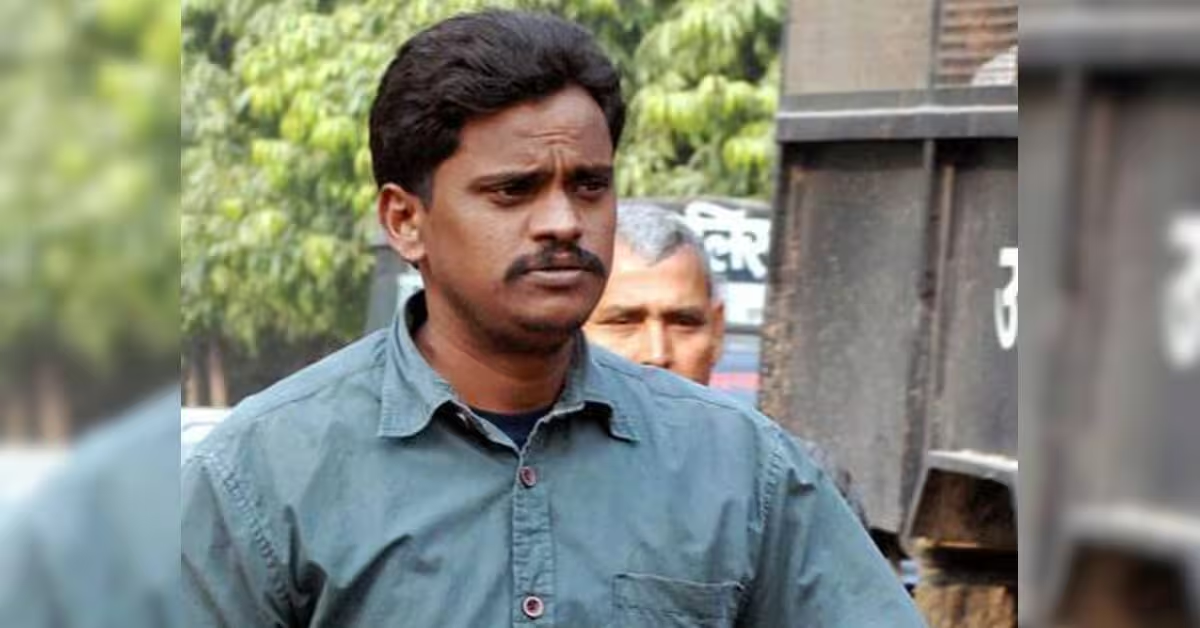
Surinder Koli, once labelled the “Monster of Nithari”, has died by suicide in Haridwar, months after the Supreme Court acquitted him in the 2006 Nithari children’s killings case.
Koli was found hanging from a rope inside his rented tea stall opposite Lalmata Temple on Sapt Sarovar Road, according to a report by NDTV. Police said no suicide note was found and that the matter was being investigated.
Koli had been living in Haridwar for a few months and was running a rented tea stall. His family in Almora was informed, according to police cited by NDTV.
The Nithari Killings: What was the case
In December 2006, police recovered 16 human skulls, bones and pieces of clothing packed in plastic sacks from behind a drain near the D-5 bungalow in Sector 31.
Residents had for years raised concerns over children going missing from nearby Nithari village, many of them from poor labour families. Their complaints were allegedly not acted upon by the police. The investigation gained momentum after a young woman, Payal, went missing. Police traced her mobile phone to a rickshaw puller, who told them he had received it from a person associated with D-5.
The bungalow was owned by businessman Moninder Singh Pandher, while Surinder Koli worked there as domestic help. When police searched the premises, they recovered evidence that led investigators to suspect a series of killings.
As details of the case emerged, allegations spread that children had been abducted, killed and dismembered, with some reports also alleging cannibalism. Pandher and Koli were subsequently arrested.
Probe, trials and acquittals
The two men were charged in multiple cases with offences including rape, murder and destruction of evidence. The CBI registered 19 cases between 2007 and 2010.
Koli was sentenced to death in several cases, while Pandher received death and life sentences in different cases. However, as the cases went through successive appeals, questions were raised over the investigation, evidence and procedural lapses.
In October 2023, the Allahabad High Court acquitted both men, citing a lack of credible evidence. The CBI, the Uttar Pradesh government and families of the victims challenged the acquittals in the Supreme Court.
In 2025, the Supreme Court acquitted Koli of all charges. While taking note of the “heinous nature” of the alleged crimes, the court held that “suspicion, however grave, cannot replace proof beyond reasonable doubt.”
[ad_2]
Source link