
[ad_1]
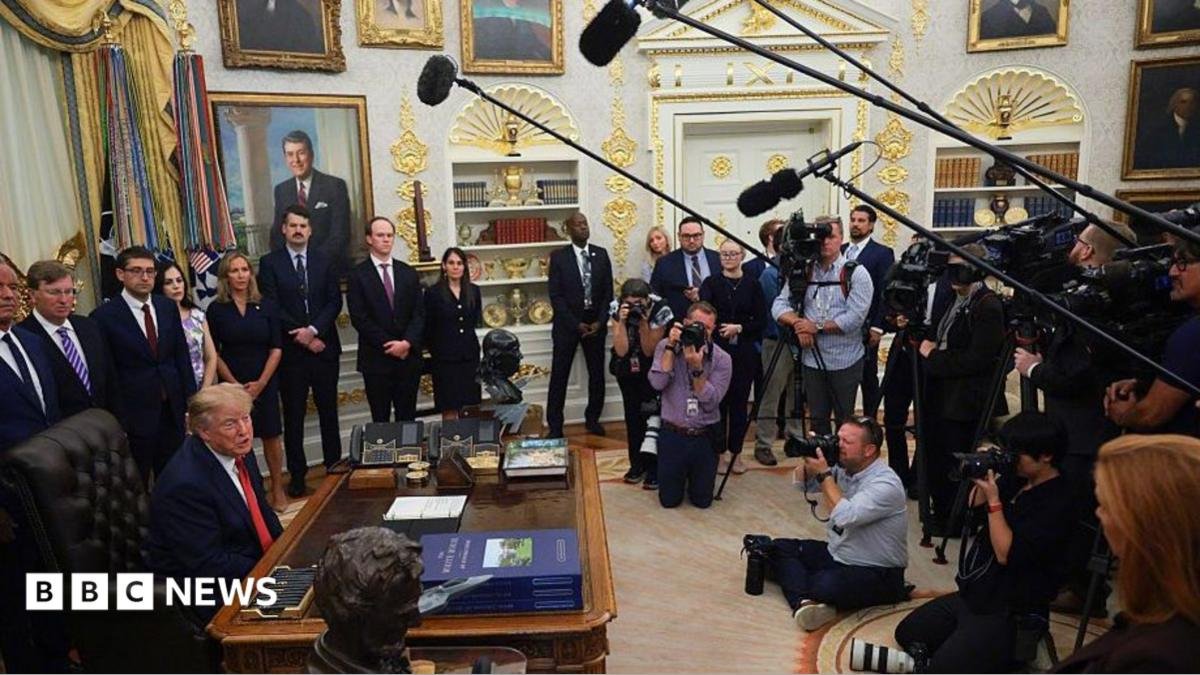
Since returning to office in January 2025, Trump and administration officials have repeatedly clashed with members of the White House press corps. In his second term, Trump has also moved to bring conservative bloggers, influencers and other media into the press room, arguing it is necessary to provide diverse perspectives to the American public.
In February, the White House announced that it was taking control of the press pool which has access to Trump and had for more than a century been managed by the White House Correspondents Association.
The same month, the administration moved to bar Associated Press (AP) reporters and photographers from spaces where access is limited, such as the Oval Office or Air Force One, because of the outlet’s usage of the term “Gulf of Mexico” instead of “Gulf of America”.
The Associated Press swiftly filed a lawsuit and the case remains ongoing.
The president often clashes with reporters in the Oval Office on Air Force One and during White House events, often referring to them as “fake news” and “rude”.
In his first term, Trump also banned CNN correspondent Jim Acosta from the White House, although they restored his credentials after CNN sued.
CNN is one of only five US news outlets that film video for the pool. The pool refers to an outlet or reporter sharing material from a presidential event with other media outlets. The BBC contributes to the White House radio pool.
The announcement was immediately criticised by leading advocacy organisations for freedom of the press.
In a statement on Friday afternoon, the Knight First Amendment Institute at Columbia University said that “with so many courts having ruled against him on exactly this point, you’d think President Trump would have learned this lesson by now”.
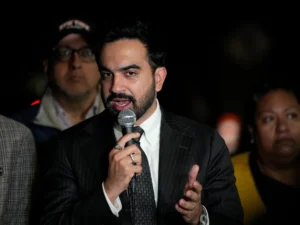
“If President Trump means to expel these news organizations from the White House press pool, his action is doubly unconstitutional because the press pool is a ‘public forum’ under the First Amendment, which means the president can’t exclude journalists from it on the basis of their viewpoints,” the institute’s executive director, Jameel Jaffer, said.
A major group that provides legal services to the media – the Reporters Committee for Freedom of the Press – said it expects Trump’s ban to be quickly struck down by the courts because it is “flatly unconstitutional”.
“The First Amendment is clear that once the White House invites in some journalists, it can’t ban others because it doesn’t like their reporting,” said the group’s president Bruce Brown, calling the potential ban “textbook viewpoint discrimination.”
[ad_2]
Source link