

[ad_1]
The weather agency expects widespread rainfall to return over northwestern parts of the country from around July 19-20.
While weather experts say a “monsoon break” is a regular feature of the season, the concern is about how long it lasts, when it occurs during the crop cycle, and which regions it affects. Another factor is that, while a week-long break is not unusual, its occurrence immediately after the monsoon covered the entire country is strange.
What is a monsoon break?
A break in the monsoon occurs when the monsoon trough, a low-pressure belt stretching from Pakistan to the Bay of Bengal, moves northwards towards the Himalayan foothills.
Mahesh Palawat, vice-president, meteorology and climate change at Skymet Weather, said, “Monsoon break occurs when the axis of monsoon trough shifts towards the foothills of the Himalayas, which is happening now. Typical break monsoon condition is when the entire trough is in the foothills of the Himalayas.”
Palawat, however, said this year’s pattern is not a textbook break. “This time the eastern end of the monsoon trough is dipping south up to northwest Bay of Bengal. That is why Bihar, Jharkhand, West Bengal and Odisha may continue to receive good rainfall during next week,” he told Business Standard.
According to the IMD’s latest forecast, heavy rainfall is likely to continue over Bihar, Jharkhand, Odisha, sub-Himalayan West Bengal and Sikkim, and the Northeast, while rainfall is expected to remain isolated over much of northwest and central India for several days.
Why this year’s monsoon break seems ‘unusual’
Monsoon break conditions are common during July and August. What has made headlines is this year is the expected duration.
Palawat said Skymet also expects a week-long break, adding that the dry spell could last around 12 to 13 days. The average duration is usually 7-8 days.
“This can be termed as unusual,” he said, adding that the current break cannot be directly linked to El Niño.
What does it mean for paddy?
Whether a monsoon break affects paddy depends largely on when it occurs and whether farmers have access to irrigation.
Prof Anubrata Deka, faculty of economics at FLAME University, said a week-long break by itself is not unusual.
“A week-long monsoon break is not uncommon, but its impact depends on both the crop’s growth stage and regional water availability,” Prof Deka said.
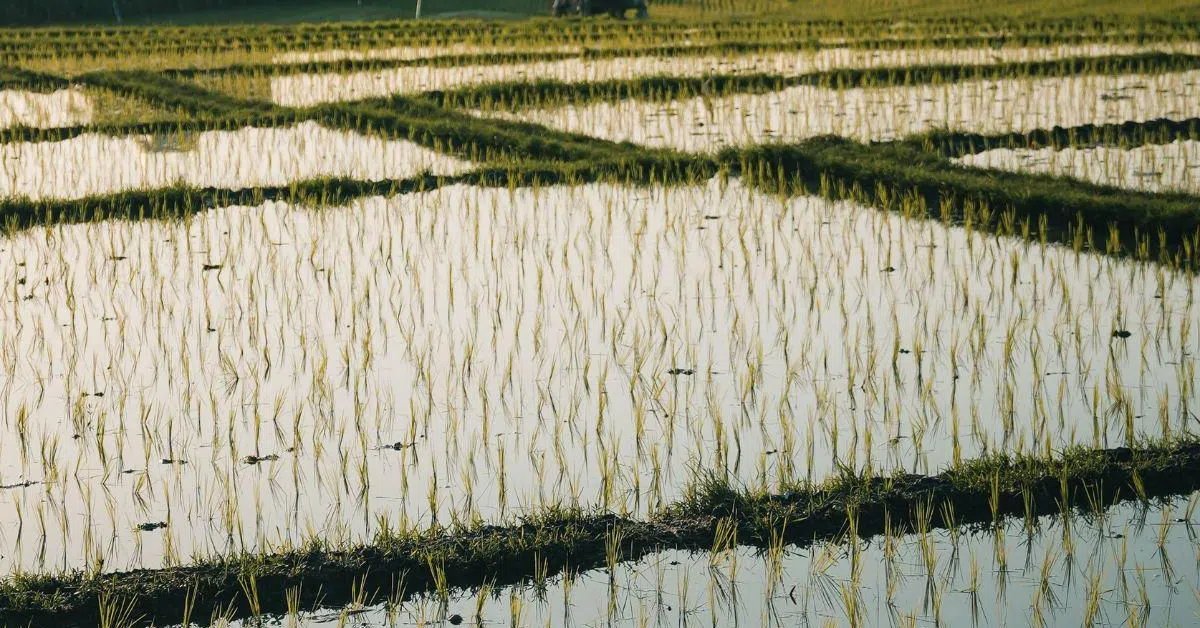
Sandeep Menon, professor and head of the Department of Agronomy at Lovely Professional University, said much of the crop is either being transplanted from nurseries into standing-water fields or establishing its root system after transplanting.
“Both stages depend on continuous soil moisture and, in rainfed fields, on rainfall arriving roughly on schedule,” he said.
Both Deka and Menon said if the dry spell extends beyond a week, farmers could face higher irrigation costs. They added that prolonged moisture stress could affect yields, although the impact would depend on irrigation coverage, local rainfall and how quickly normal monsoon conditions return.
Which states are likely to be affected?
Menon said the impact of the current break will not be uniform across the country. “States like Punjab, Haryana and western Uttar Pradesh, where canal networks and tubewell irrigation are widespread, are relatively insulated. The greater risk is in the rainfed paddy belt of eastern Uttar Pradesh, Bihar, Jharkhand, parts of West Bengal, Odisha and Chhattisgarh, where farmers depend far more on timely rainfall,” he said.
On the ground
For farmers, the immediate concern is irrigation.
Sandy Khanda, a paddy farmer from Haryana’s Jind district, said transplantation in his area started later than usual this year, making the current dry spell more challenging.
“The paddy is highly dependent on the monsoon. Especially during the early growth stage, timely rainfall is essential,” he said.
Around 60 per cent of irrigation on his farm depends on borewell water. He said declining groundwater levels forced his family to replace a 200-foot borewell with a 300-foot one at a cost of around ₹2 lakh.
“The dry spells have forced us to rely much more on the borewell irrigation. This has also increased our electricity consumption and irrigation expenses,” he said.
If the dry spell continues, Khanda expects irrigation costs to rise further. “Paddy needs water continuously. We may have to pump more water. This will further increase our power consumption bills and put additional pressure on us economically,” he said.
Khanda also said localised weather forecasts in regional languages would help farmers better plan irrigation and other field operations.
Why timing matters
Labanya Prakash Jena, director of the Climate and Sustainability Initiative, said while monsoon breaks are not unusual, the bigger concern is that dry spells are becoming longer and are increasingly occurring alongside heat.
“The concern today is less about their occurrence and more about their intensity and timing,” he said.
The timing is particularly important for agriculture. “A prolonged dry spell during sowing or flowering can significantly reduce yields,” he said.
Jena said strengthening micro-irrigation, improving soil moisture monitoring, redesigning crop insurance to account for the timing of rainfall deficits and investing in drought-resilient crops would help farmers better cope with such events.
As the monsoon progresses, the length of the current break and the speed of its revival will determine whether it remains a routine pause in the season or becomes a much bigger concern for the kharif crop.
[ad_2]
Source link