


[ad_1]
By Unni Krishnan and Aryan Gupta
India’s southern state of Kerala is committed to expanding Adani Group’s ambitious deepwater port despite objecting to a proposed stake sale, Chief Minister V.D. Satheesan said, signaling a softer stance toward a project that could reshape the country’s role in global shipping.
“It has to be expanded. Outside the harbor also.” Satheesan told Bloomberg News in an interview on Tuesday. He said the state was acquiring additional land for supporting infrastructure. “We are giving property for the container stations also.”
The comments came days after Satheesan objected to MSC Mediterranean Shipping Company SA’s planned $1.4 billion investment in the project. If approved, the deal would give the Swiss shipping company a 49% stake in the Adani Ports and Special Economic Zone Ltd.-operated port at Vizhinjam.
Satheesan said Kerala’s objection was limited to the stake-sale proposal being submitted to India’s market regulator without prior consultation. A panel led by the state’s top bureaucrat is reviewing the proposal to ensure Kerala’s interests are protected and assess whether the transaction could give MSC excessive control over the project, he said.
“There is no controversy at all,” Satheesan said. “We are inviting investments.”
A representative for the Adani Group did not offer any immediate comments.
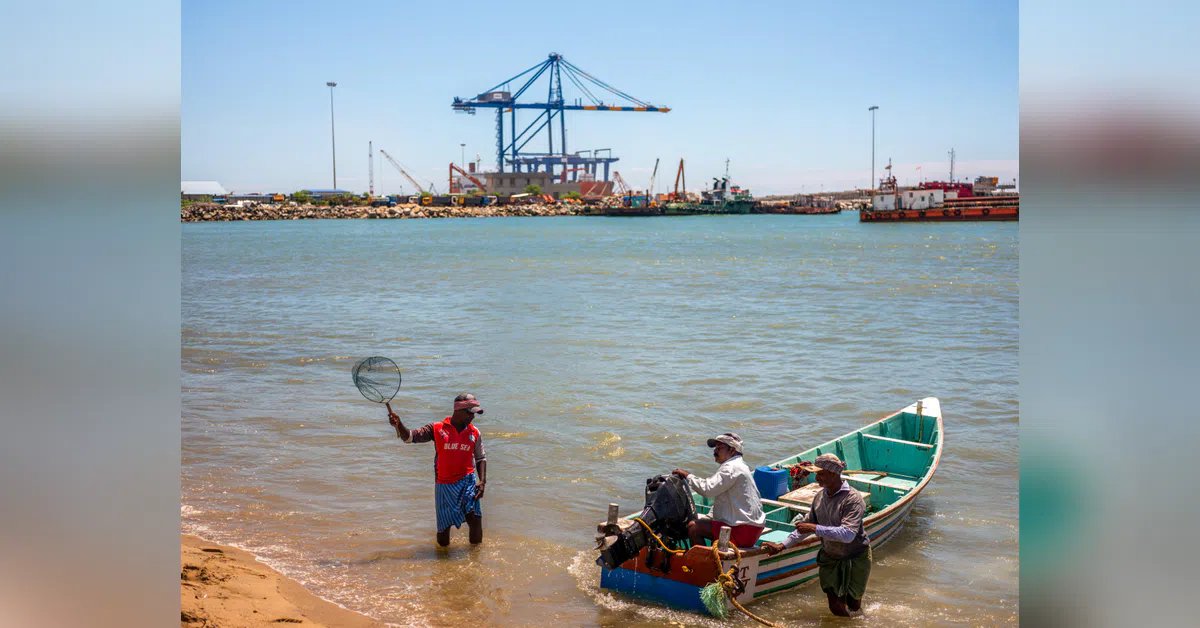
Vizhinjam is one of India’s most ambitious port developments. The deepwater transshipment hub near India’s southernmost tip is being scaled up to 5.7 million twenty-foot equivalent units (TEUs) of capacity from 1.6 million TEUs when it was commissioned in 2024. That will help it attract the world’s largest container vessels and place India firmly on major east-west shipping routes, positioning it to win traffic currently bound for Colombo, Dubai or Singapore.
The project has also been championed by Prime Minister Narendra Modi, who said Vizhinjam would generate new economic opportunities for India. Asia’s third-largest economy currently relies on overseas ports for about 75% of its transshipped cargo.
Kerala’s location close to one of the world’s busiest maritime trade routes gives Vizhinjam a strategic advantage, while its natural depth and upgraded infrastructure are designed to attract ultra-large container ships that previously bypassed Indian ports.
Vizhinjam is part of Kerala’s broader push to attract private investment and shed its reputation as a state where land acquisition hurdles and labor issues have discouraged businesses.
Satheesan said the government is trying to create a more business-friendly environment by speeding up approvals and offering greater support to investors. The Tata Group has also sought approval to invest $1 billion in shipbuilding in the state.
The push extends beyond ports. Satheesan said the state’s technology parks in Thiruvananthapuram and Kochi have reached capacity, prompting the government to acquire more land and develop new IT parks near Kerala’s four international airports.
A former trade union leader, Satheesan said labor militancy is no longer a significant barrier to investment in Kerala. Strikes have largely disappeared in recent years and unions have shifted their focus on improving productivity and seeking a larger share for workers in company’s profit.
“This is the new culture in Kerala,” Satheesan said. “All the public sectors and private sectors are now ready to give their production incentive to the laborers.”
[ad_2]
Source link