

[ad_1]
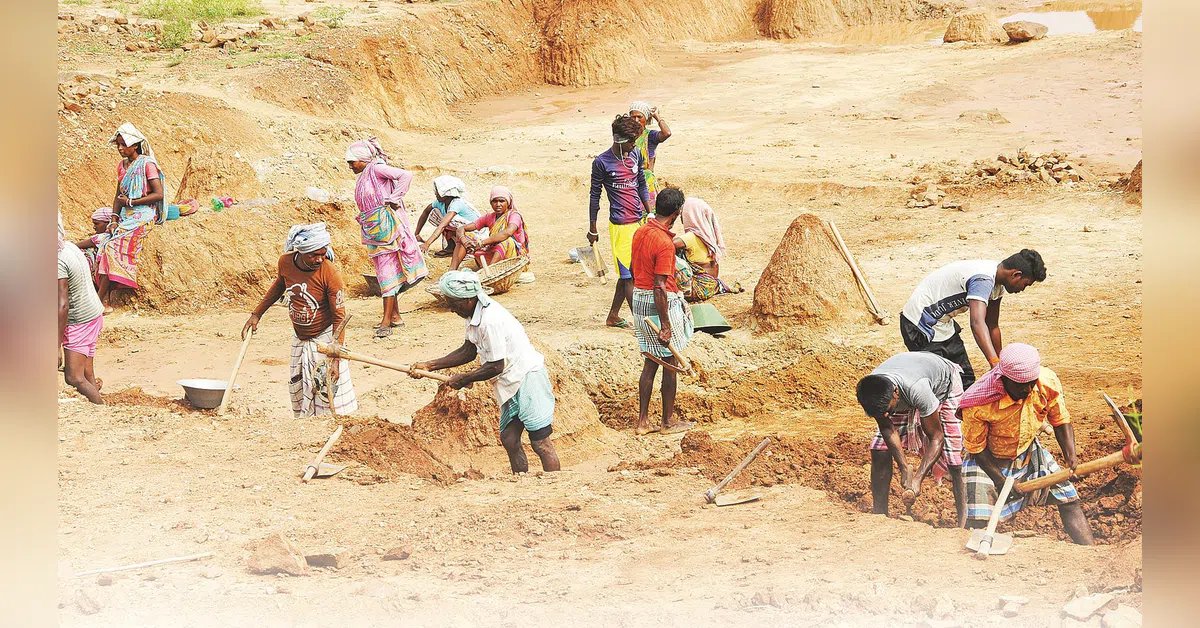
The Union government on Saturday published draft rules under the newly-enacted Viksit Bharat Guarantee for Rozgar and Ajeevika Mission (Gramin) Act 2025 (VB-G RAM G), seeking public comments ahead of the rural employment framework’s nationwide rollout on July 1, 2026.
The Ministry of Rural Development said the draft rules have been framed under Section 33 and other relevant provisions of the Act and have been placed in the public domain to ensure a participatory consultation process before being finalised. The draft rules are available on the e-Gazette portal, where individuals, stakeholders, organisations and institutions can submit objections or suggestions by June 21.
The VB–G RAM G Act was notified on May 11, 2026, replacing the earlier Mahatma Gandhi National Rural Employment Guarantee Act (MGNREGA) framework in a phased manner.
According to the ministry, the draft rules are aimed at creating the institutional, administrative, financial, and governance architecture needed to implement the new rural livelihoods and employment guarantee programme.
Among the draft rules released for consultation are the Transitional Provisions Rules, National Level Steering Committee Rules, Central Gramin Rozgar Guarantee Council Rules, Administrative Expenses Rules, Grievance Redressal Rules, and rules governing payment of wages and unemployment allowance. The Centre has also issued draft norms related to expenditure incurred beyond normative allocations and financial arrangements for Union Territories without legislatures.
According to an official statement, the Transitional Provisions Rules, 2026 are intended to facilitate a smooth migration from the MGNREGA regime to the VB–G RAM G scheme, and to improve transparency, accountability and citizen-centric governance under the new framework.
These provisions include continuation of ongoing works, settlement of liabilities, validity of existing job cards, and interim fund arrangements until states formally notify and operationalise the new scheme.
The statement said that the Grievance Redressal Rules, 2026 propose a technology-enabled and time-bound grievance management mechanism with provisions for digital registration, tracking, escalation and appeals.
The government said the wider consultation exercise reflects its commitment to participatory governance and stakeholder engagement in shaping the implementation architecture of the jobs programme.
The official statement said that the VB–G RAM G framework is expected to form the backbone of the Centre’s rural employment and livelihood strategy, with a focus on strengthening rural livelihoods, employment generation and sustainable rural development.
[ad_2]
Source link