

[ad_1]
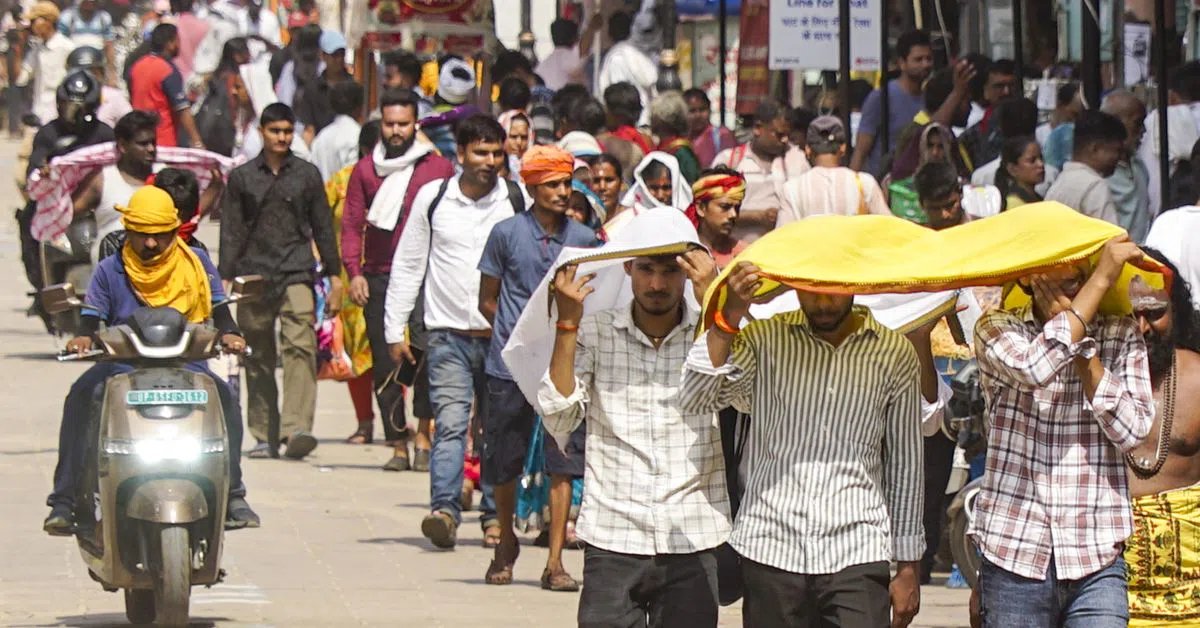
India’s response to extreme heat has changed over the past decade-and-a-half. There are Heat Action Plans (HAPs) in place and building codes that aim to keep infrastructure cooler for longer, reduce power bills, and lower peak electricity demand during heatwaves. Yet, for millions of people, especially those in low-income and high-density neighbourhoods, there has been little change in their experience of heat.
Part 1 of this series showed how heat is increasingly an urban design problem. In this part, we evaluate the next question: If heat is shaped by city design, why is it still treated mainly as a matter of emergency response?
Limits to heat action plans
Heat Action Plans are meant to reduce heat-related illnesses and prevent deaths by preparing administrations before and during heatwaves. They typically include early warnings, public advisories, hospital preparedness, ambulance readiness, drinking water supply, changes in school or work timings, public awareness campaigns, and coordination among disaster management, health, labour, water and municipal departments.
However, the problem is that many of these responses are not designed around long-term heat reduction. They help governments warn people about heat conditions at the moment but do not change the fundamental city conditions that produce heat exposure in the first place.
Why heat action plans remain advisory
According to Prof Anjal Prakash, faculty of public policy at FLAME University in Pune, many HAPs remain as just advisories because heat governance is split across multiple agencies.
“A heat action plan is supposed to be a very integrated plan, where different departments and local bodies, urban development bodies, the health department, disaster management authorities and the state government all have to work together,” Prof Prakash told Business Standard.
What heat action plans include (Graphic created using ChatGPT)
The National Heat Impact Assessment Framework flags that current HAPs are not notified under existing legal frameworks such as the Disaster Management Act, 2005, which means compliance is largely voluntary. Municipalities do not face penalties for failing to implement measures such as cooling shelters or water stations.
Prof Mary Tahir, faculty at Department of Geography at Delhi’s Jamia Millia Islamia, also said many HAPs are treated as seasonal guidance documents rather than enforceable governance instruments.
“Most HAPs are not backed by statutory authority. Unlike disaster management rules for floods or cyclones, heat response protocols are usually issued as administrative advisories by municipal corporations or state departments,” she said.
According to her, operationalising HAPs would require dedicated urban climate resilience cells, permanent interdepartmental heat units, heat officers at the district or city level with budgetary authority, and ring-fenced climate adaptation budgets.
Heat is still not built into city planning
Rajneesh Sareen, programme director, Sustainable Buildings and Habitat Programme, Centre for Science and Environment, said translating heat action plans into building and street design will require their integration into city master plan as well as urban design.
India has two main building codes – the Energy Conservation Building Code (ECBC) for commercial buildings and Eco Niwas Samhita (ENS) for homes. These codes are meant to make buildings use less electricity for cooling, lighting, ventilation and other services.
However, they work only when they are adopted and included in building bye-laws and approval systems. The RMI India Foundation’s ‘Turning Down the Heat’ report says India’s cool roof adoption faces fragmented policies and inconsistent enforcement, with ECBC and ENS provisions applied unevenly and green ratings treating reflective roofs as optional. In affordable housing schemes such as Pradhan Mantri Awas Yojana, cost ceilings and rigid tenders limit adoption without stronger mandates and incentives.
Can market demand push better design?
While regulation remains uneven, some demand for better buildings is beginning to emerge from homebuyers.
Somesh Mittal, co-founder of Haryana-based real estate firm One Prastha, said homebuyers today are more aware of green buildings and long-term cooling costs. “These days, homebuyers are very much aware of the whole concept of green buildings, which does not only reduce the carbon footprint from a developer’s side, but also gives long-term comfort to the buyers,” he said.
He cited the example of a customer asking whether a clubhouse used DGU (double-glazed units) glass, because it would reduce electricity bills and eventually lower the cost borne by residents.
“Buyers keep asking these kinds of questions, which keep the developer also on their toes so that they keep that in mind when they are planning spaces,” Mittal said.
However, he acknowledged that passive cooling and better systems may raise the initial cost. “The initial capital is higher, but from a long-term impact and from the impact that it has on the customer, it is long-lasting,” he said.
Mittal said design can absorb part of the cost if sustainability is integrated from the beginning. “Design plays a very important role, and there are a lot of architects who are only working with sustainable designs,” he said.
But he said code compliance is still largely seen as a regulatory requirement. What is changing the game in Haryana, according to him, is the incentive of additional floor area ratio, or FAR, for green building certification.
“If you go for a green building, you might be able to make 115,000 square feet. So, you get 15,000 square feet of extra space to sell just because you are implementing sustainability in your project,” he said.
What has worked so far
India is not short of examples. Ahmedabad’s Heat Action Plan is widely recognised as an early model.
It began after the deadly May 2010 heatwave, which was linked to 1,344 excess all-cause deaths. The Ahmedabad Municipal Corporation launched India’s first city-level Heat Action Plan in 2013. The plan combined public awareness, heat alerts, inter-agency coordination, health worker training and measures to reduce heat exposure.
The model made heat response operational rather than merely advisory. AMC designated a nodal officer, activated citywide alerts when extreme heat was forecast, notified municipal and state agencies, opened cooling centres in public buildings and religious spaces, kept shelters available for those without water or electricity, expanded drinking water access, and prioritised power supply for hospitals and urban health centres. Later versions also included cool roofs, with pilots in low-income homes and a target-based plan for wider city adoption.
An assessment of the 2013 and 2014 implementation by the Natural Resources Defense Council found that city-reported heat-season deaths fell after the plan began and estimated at least a 25 per cent reduction in May excess all-cause mortality.
RMI’s cool roof report also lists initiatives in cities such as Surat, Indore, Bhopal, Delhi and Hyderabad. Telangana’s state-level cool roofs policy aims to cover 300 sq km of roof area by 2028. The Delhi government has also launched a Heat Action Plan for 2024-25, dividing implementation into pre-heat, during-heat and post-heat phases. It assigned nodal officers, departments, health agencies, emergency services, labour officials and community groups specific roles, including preparedness, alerts, cooling centres, medical response, water access, and post-season evaluation.
But cities cannot be entirely redesigned to include all these measures. This leads to retrofitting, which comes at an additional cost.
Retrofitting versus redesign: What’s the way forward?
RMI India Foundation’s ‘Turning Down the Heat’ report estimated that Chennai has 15.3 million sq m of feasible rooftop area for cool-roof adoption, including 6.5 million sq m of residential space. Implementing cool roofs would cost about ₹390.7 crore for residential rooftops and ₹917.7 crore for citywide adoption, which the report described as modest in the context of the Greater Chennai Corporation’s annual budget of ₹4,200 crore.
Sareen said the challenge in retrofitting buildings, especially in affordable housing clusters and busy urban areas, is less about technical feasibility and more about construction choices and mindset. He said buildings are still judged largely by speed and structural strength, while heat performance is often ignored.
He added that cool roofs can offer quick retrofit potential, but they should not be treated as the only intervention. “Cool roof is a promising initiative which can result in quick retrofits, should be taken up on mission mode, also bring distributed green and blue infrastructure as having park or one water body at one corner of city cannot impact on the complete micro climate of city,” he said.
So, what’s the way forward? Experts say both redesigning and retrofitting will be needed because Indian cities are already built unevenly, while new construction is continuing at a rapid pace.
“Wherever new development is happening, we must include these. Also, retrofit places where it is required. Where you cannot rebuild, you have to retrofit,” Prof Prakash said.
That means new housing, offices, schools and public buildings need heat-sensitive layouts, shaded streets, passive cooling, better materials and energy-efficient systems from the design stage. Older neighbourhoods, especially low-income settlements, rental housing and public buildings, need practical retrofits such as cool roofs, shaded courtyards, ventilation improvements, reflective surfaces, tree cover and access to cooling spaces.
Where ERVs fit into heat-resilient buildings
The heat problem is not limited to affordable housing. Dense urban clusters and high-rise apartments, as well as commercial buildings, also face the issue.
ERVs not only reduce cooling load and ventilation energy, but also lower electricity bills. (Graphic made using ChatGPT)
Experts say they could matter in hospitals, schools, offices, commercial buildings and multi-family housing where ventilation, indoor air quality and cooling demand intersect. But high installation cost sometimes acts as a deterrent.
To reduce this constraint, Prof Prakash said subsidies, tax rebates and low-interest loans could help drive adoption. ERV performance requirements could also be incorporated into building codes and green building rating systems.
“With one policy stroke, we can make it mandatory for those. It will work wonders because then it will reduce not only energy costs, but also the load on air conditioning,” Prof Prakash said.
Prof Tahir said ERVs should be explicitly considered in heat-resilient plans, especially for hospitals, schools, offices and high-occupancy buildings in hot-humid or polluted regions.
Financing urban cooling
Heat adaptation needs money. But municipal finance is already stretched, and heat projects often compete with roads, drainage, sanitation, housing, water and transport.
The National Heat Impact Assessment Framework says current HAPs are not mandatorily funded, and only three out of 37 plans studied by the Centre for Policy Research had defined funding sources that could be used for implementation. Without dedicated budget codes, HAPs remain advisory documents rather than executable infrastructure projects, the framework notes.
Prof Prakash said HAPs need ring-fenced budgets. “Many measures, housing retrofits, public cooling infrastructure, need capital. Without a dedicated budget line, they remain advisory measures,” he said.
But what could be other financial instruments beyond municipal budgets? A 2025 study by Council on Energy, Environment and Water, titled ‘Innovative Financial Instruments for India’s Urban Climate Resilience’, identified green and resilience bonds, PPPs, blended finance, pooled funds, credit guarantees and insurance-based risk management as ways to mobilise private and concessional capital for climate-resilient infrastructure.
For larger cities, municipal green bonds can fund projects with clearer revenue streams. The study cited Vadodara Municipal Corporation’s certified green municipal bond, through which it raised ₹100 crore in 2024 for wastewater management. For smaller urban local bodies, the study suggested pooled financing and insurance-based facilities, where cities combine borrowing needs or risks to access cheaper capital and better insurance terms.
Besides budget allocation, there needs to be a check on how they are used. Prof Prakash said annual audits of HAPs can improve accountability, but they should be independent. “What we need is a regular independent audit. And it should not be done by the same department or agency that actually implements it,” he said.
According to him, useful audits need measurable indicators, such as heat-related hospital admissions by area and month, the functional status of cooling centres, outreach coverage and response time to warnings. He said audits should also be linked to financing.
From temperature alerts to impact alerts
The National Heat Impact Assessment Framework says most plans rely on citywide alerts based on a single temperature threshold, creating a “one-size-fits-none” problem. It also says early warning systems are often triggered by dry-bulb temperature alone, ignoring humidity, even though heat exposure in coastal cities such as Mumbai and Chennai is shaped by humidity and wet-bulb conditions.
The framework proposes moving from generic alerts to impact-based decision-making. “Many heat action plans are now being updated, and they are also progressing towards planning how to include night-time measures, such as cooling centres that operate overnight, targeted housing support for night-shift workers and slum dwellers, and monitoring of minimum temperatures,” Prof Prakash said.
This would allow more targeted action. Instead of issuing a blanket “stay indoors” advisory, a city could pre-position water and fans in specific neighbourhoods, send additional health staff to vulnerable hospitals, warn outdoor workers in relevant locations, open cooling centres where air-conditioning access is low, and adjust work or school timings based on actual risk.
[ad_2]
Source link