
[ad_1]
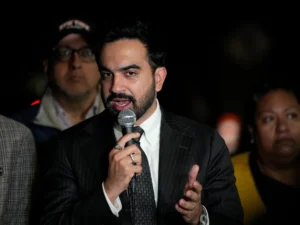
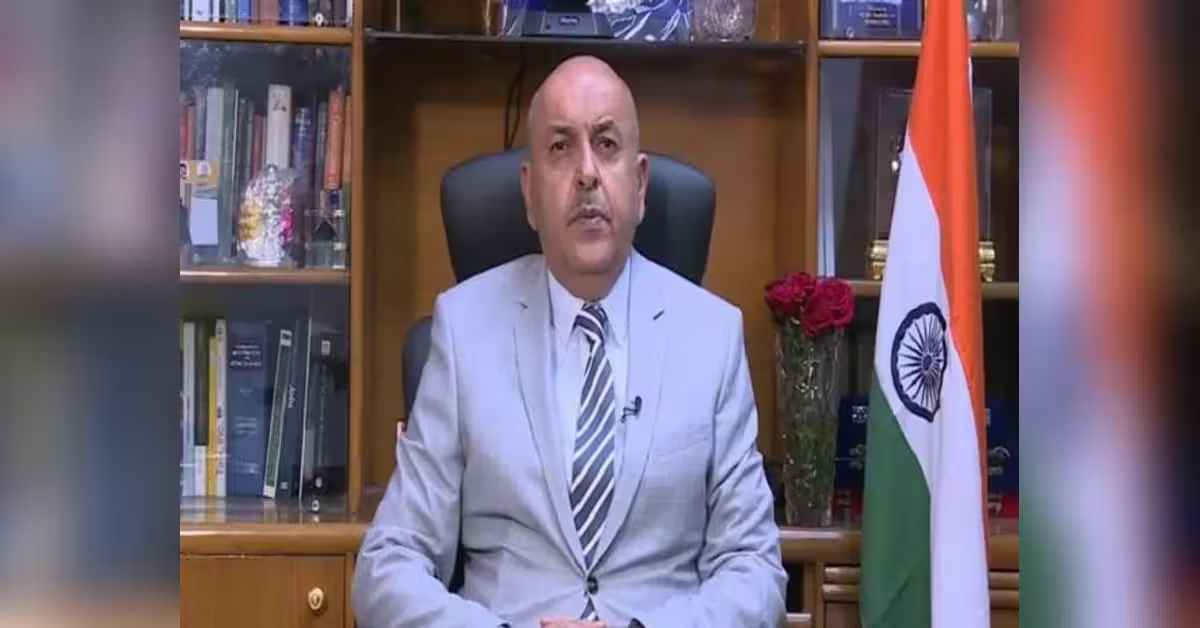
The shortage of heavy rare-earth magnets has shown how “a country” can hold India to “ransom” over a small component, Tarun Kapoor, adviser to Prime Minister Narendra Modi, said on Thursday.
India needs to move quickly to build manufacturing capacity for critical components where supply alternatives are concentrated elsewhere, he said in his speech at the 66th Annual Convention of the Society of Indian Automobile Manufacturers (SIAM).
The aforementioned issue arose in April 2025, when China imposed export restrictions on seven heavy rare-earth elements and related magnets. This move disrupted production by Indian automakers, which sought government intervention. The automakers have been managing by drawing on inventories and changing magnet technologies (shifting to light rare-earth magnets, which are easily available in other countries) in their vehicles.
Kapoor asked the automobile industry to work with the government to identify such vulnerabilities before they turn into a supply-chain problem. He said the objective should not be complete self-sufficiency, but ensuring that India does not face serious disruption because a critical component is dependent on a single source.
“Some exports will also happen but then at least we should be able to cater to our own requirement otherwise then that is becoming a bottleneck world over and we have seen that one small component like we saw with the rare earth magnets — just a small component — a country can hold us to ransom,” he said.
“So at least those critical things — where the alternatives are probably concentrated in one country or somewhere — all those we have to look at and thus you can tell us what you think could be something on which there could be an issue or a problem in the future. So we have to move fast and get all that critical manufacturing also into India,” he added.
India has meanwhile stepped up efforts in 2026 to reduce its dependence on China for rare-earth magnets, including through a Rs 7,280-crore manufacturing scheme and plans to create 6,000 tonnes of domestic capacity annually.
He stressed that such localisation should be selective rather than an attempt to produce everything within the country.
“I don’t say that India can become self-sufficient in every part or every material which goes into manufacturing but at least those critical items — where we think that there could be a problem — let us all think and then work together so that all that danger of getting into some kind of trouble goes away,” he noted.
Kapoor separately flagged semiconductors as another area where domestic capacity needs to grow substantially. Semiconductors are electronic chips that control several functions in modern vehicles, including their electronic systems and powertrains. He said their availability had become “a bottleneck” for the industry and the first semiconductor foundry coming up in India would meet only a small part of domestic demand.
The government has now brought in the Semicon 2.0 programme, under which Kapoor said Rs 1.25 lakh crore is being invested to build a complete and self-reliant semiconductor ecosystem. While the second phase will address some gaps in the first programme, he said India will still need much more semiconductor manufacturing capacity to meet its own requirements.
The Prime Minister’s adviser also called for a faster shift towards electric vehicles, saying the West Asia crisis had made the issue of energy security more urgent. India’s domestic petroleum resources are not enough to meet its current requirements, Kapoor said, while demand for petroleum products is expected to continue rising.
Kapoor said heavy vehicles, particularly trucks, were his main concern in the electric transition. Under the PM E-DRIVE scheme, there is a provision for 5,000 electric trucks, but he said only around 150 had been covered so far. He also said 5,000 was itself a very small number.
“So every time I come to such a session, I talk about this and again now the need has become even more. So we have to move much much faster and we need to push electric in a big way,” he said.
He also told the industry to prepare for tighter measures to accelerate electrification, particularly for passenger vehicles. “On the four-wheeler side, I can tell you that more and more restrictions will come. So therefore, please be prepared and we need to push electric in a big way,” he noted.
Kapoor also pointed to the Parivartan scheme for the National Capital Region, which seeks to replace BS-I, BS-II and BS-III vehicles completely and BS-IV vehicles largely. Although the scheme talks about moving to BS-VI vehicles, he said the government would prefer moving directly to electric vehicles instead of making it a two-stage transition.
BS-VI (Bharat Stage 6) emission norms were implemented nationwide on April 1, 2020 (skipping the BS-V stage entirely to align directly with Euro 6 standards). These regulations dictate the maximum permissible levels of harmful pollutants a vehicle’s exhaust can emit. The government is now in discussions with the industry to implement BS-VII norms from 2027.
[ad_2]
Source link