

[ad_1]
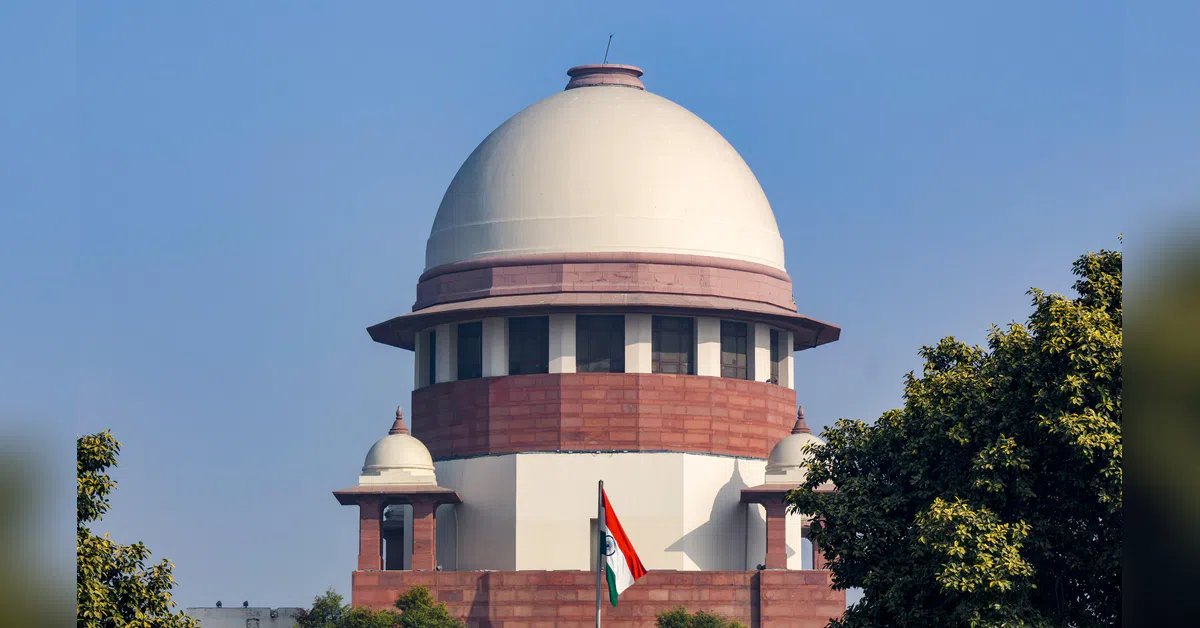
The Supreme Court on Thursday signalled that it may refer to a larger Bench the question of whether investigating agencies are constitutionally required to furnish the grounds of arrest in writing at the time of arrest, citing conflicting rulings by coordinate Benches on the issue.
A partial court working days Bench of Justices Manoj Misra and Shree Chandrashekhar made the observation while hearing the Meghalaya government’s appeal against the bail granted to Sonam Raghuvanshi, the prime accused in the alleged murder of her husband, Raja Raghuvanshi, during their honeymoon in Meghalaya in May 2025.
Justice Misra pointed out that the court’s decisions have not spoken in one voice on the issue. He referred to the ruling in Pankaj Bansal, which held that the Enforcement Directorate must provide the grounds of arrest in writing; the later decision in Dr Rajinder Rajan, which extended that principle while granting bail in an NDPS case; and the judgment in Vihaan Kumar, which held that although an arrested person must be informed of the grounds of arrest, there is no mandatory requirement that they be supplied in writing.
The Bench observed that the apparent inconsistency between these judgments may require authoritative resolution by a larger Bench.
Appearing for the Meghalaya government, Solicitor General Tushar Mehta argued that the present case did not involve non-supply of the grounds of arrest.
He submitted that the accused had been served the written grounds, but one provision of the Bharatiya Nyaya Sanhita (BNS) was incorrectly cited because of a typographical error.
According to him, the lower courts granted bail solely because the arrest memo mentioned a non-existent Section 403 instead of Section 103 of the BNS.
Justice Misra, however, remarked that the substance of the accusation was more important than merely citing statutory provisions. The court observed that the arrested person must be informed of the essence of the allegations, including the nature of the offence for which they are being arrested.
Calling the matter serious, the Bench directed the state to place on record legible copies of the original arrest documents supplied to the accused and posted the matter for further hearing on Tuesday.
The appeal stems from a Meghalaya High Court order upholding bail granted to Sonam Raghuvanshi. The High Court had held that the repeated reference to a non-existent statutory provision in the arrest records reflected a lack of due application of mind and vitiated the arrest process.
Earlier this month, another Bench of the Supreme Court declined to stay Sonam Raghuvanshi’s release, noting that she had already been released on bail, but agreed to examine the Meghalaya government’s challenge to the High Court’s decision.
The case relates to the death of Raja Raghuvanshi, who disappeared along with his wife during their honeymoon in Meghalaya shortly after their marriage in May 2025. His body was recovered from a gorge in East Khasi Hills, while Sonam was later traced in Uttar Pradesh.
The Meghalaya Police have since filed a chargesheet running to over 700 pages, alleging that the murder was pre-planned by Sonam Raghuvanshi and her alleged associate, Raj Kushwaha.
[ad_2]
Source link