

[ad_1]
Critics say the 39 percent cap was a safeguard against excessive concentration of media ownership in the US.
Published On 6 Aug 2026
The United States Federal Communications Commission has voted to rescind the rule that bars local broadcast station owners from reaching more than 39 percent of the total number of US TV households in a move that could help spark industry consolidation.
The FCC on Thursday voted 2-1 to lift the cap in favour of a new case-by-case approach. The commission’s sole Democrat, Anna Gomez, said the proposal was illegal and argued only the US Congress can lift the cap. Many critics argue the move will lead to excessive market power among station owners.
Recommended Stories
list of 4 itemsend of list
Under the rules, stations with weaker over-the-air signals can be partially counted against a company’s ownership cap. The FCC has limited ownership of local broadcast stations since 1941 and most recently raised the cap to 39 percent in 2004.
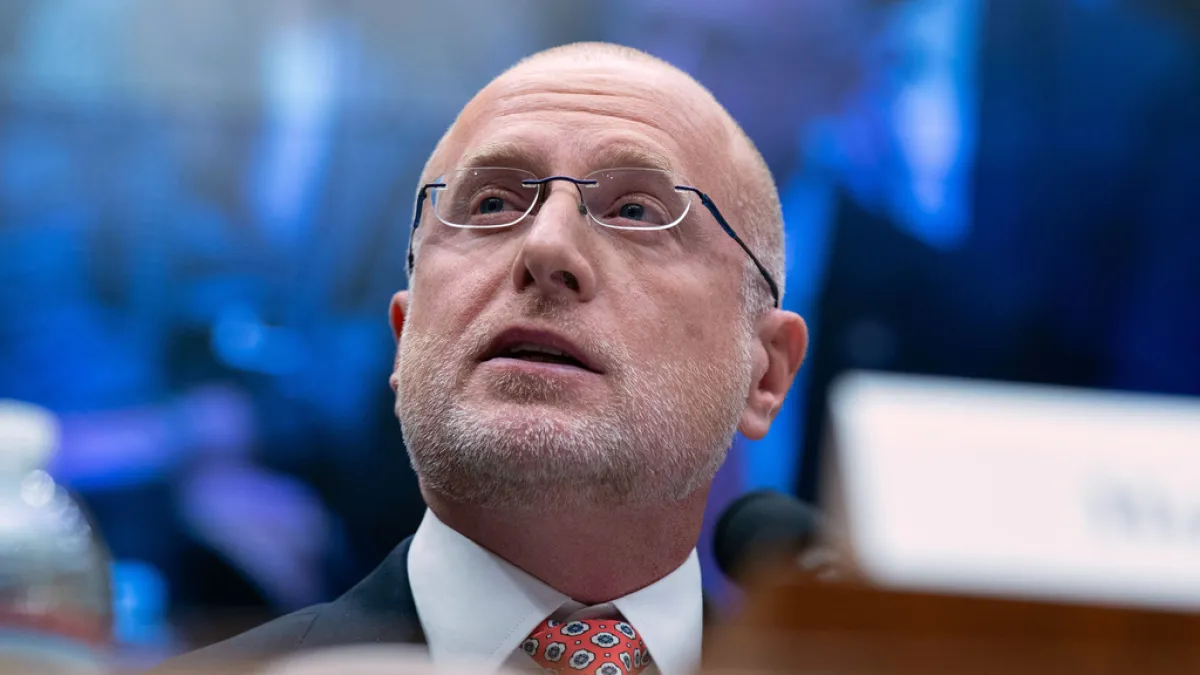
FCC Chairman Brendan Carr said the move is about helping local broadcasters survive and pointed to the sharp decline in local newspapers.
“We should stop hamstringing this one segment of the broader market with outdated restrictions,” Carr said.
“The FCC kept a rule on the books in the name of localism that contributed to the gutting of local newspapers … I don’t want local broadcast TV to go the way of local newspapers.”
The FCC said the new rule would consider applications on television company mergers that would go above 39 percent on an individual basis to determine if they are in the public interest. The agency said it would “remove artificial restrictions on opportunities for broadcast television to attract capital and generate revenue”.
Gomez said the decision is “an invitation to bring in a lot of transactions”.
‘More control’
Lifting the cap hands “more control of the public airwaves to a small number of companies whose coverage pleases this administration … It is putting its thumb on the scale in favour of content that this administration likes,” she added.
Carr has said the change would allow local television owners to increase investment in local programming and give them more leverage against national networks.
In March, the FCC approved the $3.54bn sale of local television station owner Tegna to Nexstar despite objections from Democratic-led states.
The acquisition, if not reversed by courts, will expand Nexstar’s presence to cover 80 percent of US TV households. The FCC has said it was waiving the 39 percent rule in approving the deal.
Senate Commerce Committee Chair Ted Cruz, a Republican, said last month that he is sceptical the FCC can hike the 39 percent cap without an act of Congress.
Clayton Weimers, executive director at Reporters Without Borders North America, said in a statement that with this latest move, the FCC has “abandoned” one of the last significant safeguards against excessive concentration of media ownership in the US, which ensured that “no single company or individual should be allowed to dominate what millions of Americans see, hear, and understand about the world”.
“Today’s vote eliminates that safeguard and only benefits a handful of already powerful media conglomerates. This is not deregulation in the public interest. It is consolidation in the interest of the powerful,” Weimers said.
He said that the action exceeds the FCC’s legal authority and that Reporters Without Borders was evaluating every available legal avenue to challenge this decision.
[ad_2]
Source link